
Electric Cycle Price in India 2026: Complete Guide to Features, Range & Running Cost
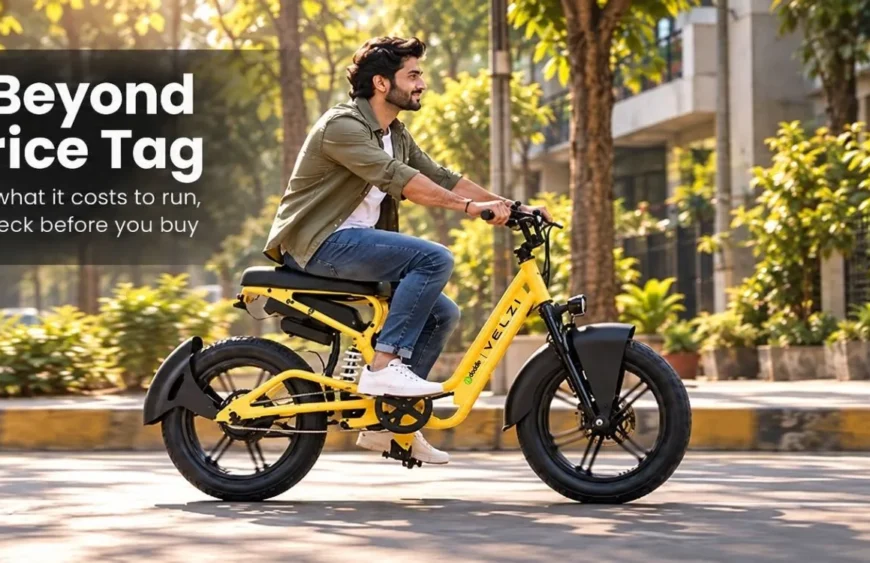
The electric cycle price in India 2026 varies widely because an e-cycle is no longer a single, standard type of product. At one end of the market are simple pedal-assist bicycles designed for short rides. At the other are comfort-focused urban e-bikes with larger batteries, removable battery packs, fat tyres, suspension, digital displays, multiple riding modes and stronger after-sales support. Two electric cycles can therefore look similar online while being very different in daily use, battery quality, real-world range and long-term ownership cost.
For Indian buyers, the smartest way to evaluate an electric bicycle price in India is not to look at the sticker price alone. The purchase decision should include battery capacity, motor rating, usable range, charging convenience, tyre and suspension setup, warranty, service support and monthly running cost. A slightly cheaper e-cycle that needs frequent charging, has limited service support or uses an undersized battery may cost more in frustration and replacement expenses over time.
This 2026 guide explains the major e-cycle prices in India bands, what features you should realistically expect at each price point, how much an electric cycle costs to run, and where the Doddle Velzi fits for riders who want a daily-use electric cycle built around Indian commuting conditions.
What Is the Average Electric Cycle Price in India 2026?
In 2026, electric cycles in India broadly sit between entry-level models below ₹35,000 and feature-rich commuter models that cross ₹60,000. There are also premium products above that range, especially when larger batteries, advanced frames, higher-end components or niche designs are involved. The important point is that price bands generally reflect more than branding: battery capacity, component quality, comfort and after-sales infrastructure usually improve as you move upward.
| Price band | What you usually get | Best suited for | Typical compromise |
| Below ₹30,000 | Basic pedal assist, smaller battery, standard cycle components | Occasional short rides, light use | Lower range, fewer comfort features, basic support |
| ₹30,000–₹45,000 | Improved battery, throttle/PAS on some models, commuter frame | Students and short-distance commuters | Range and suspension may still be limited |
| ₹45,000–₹60,000 | Larger battery, stronger comfort package, removable battery, better tyres/brakes | Regular urban commuters | Higher upfront cost |
| ₹60,000+ | Premium battery/frame/components, specialised styling or higher-end hardware | High-usage riders or premium buyers | Price may rise faster than practical benefit for some users |
This makes electric cycle cost in India a value question rather than a simple cheapest-versus-expensive comparison. If your commute is 15–25 km a day, a well-equipped mid-range cycle can make more sense than an entry-level model that needs more frequent charging or offers less comfort on rough roads.
What Actually Determines Electric Cycle Price?
The battery is usually the single most important cost component in an electric cycle. Battery voltage, amp-hour capacity, cell quality, battery-management system, enclosure and removability all affect price. A larger battery does not automatically guarantee better real-world range, but it gives the system more stored energy to work with. The motor, controller, display and wiring are the second major electrical group, while the frame, brakes, tyres and suspension determine how the cycle feels after the excitement of the first week wears off.
Battery Capacity and Removability
A removable battery is especially valuable in Indian apartments, offices and hostels because the rider can carry the battery indoors instead of finding a socket next to the parked cycle. Doddle Velzi uses a 48V 13Ah removable battery, specified at 624Wh, with charging taking around 4–5 hours. Doddle lists up to 85 km range on pedal assist and up to 45 km on throttle, depending on riding conditions and mode.
Motor and Legal Speed
For a commuter electric cycle, a 250W motor and a maximum assisted speed of 25 km/h are common benchmarks in India. More power is not automatically better for a rider who primarily wants efficient urban travel. What matters is smooth assistance, predictable acceleration and a system that is matched correctly to the battery and controller.
Tyres, Suspension and Everyday Comfort
A low electric cycle price can be attractive until daily road conditions enter the picture. Potholes, broken patches, speed breakers and rough shoulders put more demand on tyres, wheels and suspension than a smooth test ride inside a showroom. Velzi uses 20×4 fat tyres, front suspension and rear mono shocks, which positions it as a comfort-first city e-bike rather than a lightweight conventional bicycle with a motor added to it.
Brakes, Display and Riding Modes
Features that look secondary on a product page can become important in daily ownership. Disc brakes, a clear digital display, lights and riding modes influence control and convenience. Velzi offers Pedal, Pedal Assist, Throttle, Cruise and Walk Assist modes, along with a digital cluster and USB charging.
Feature Expectations by Price Range
| Feature | Budget e-cycle | Mid-range commuter e-cycle | What to check before buying |
| Battery | Usually smaller capacity | Larger capacity, often removable | Voltage, Ah/Wh, warranty, replacement availability |
| Range | Short to moderate | Moderate to long | Ask for PAS and throttle range separately |
| Tyres | Standard bicycle tyres | Standard or fat tyres | Road grip, puncture resistance, replacement size |
| Suspension | None or front only | Front, sometimes rear support | Comfort on potholes and broken roads |
| Brakes | Basic mechanical setup | Disc brakes common | Stopping feel and pad availability |
| Display/modes | Basic indicator | Digital display, multiple modes | Ease of use and visibility |
| Support | Marketplace/seller dependent | Brand support network more common | Warranty process, spare parts, response time |
Doddle Velzi Price and What You Get
The Doddle Velzi is currently listed at ₹54,999 including shipping and taxes, against an MRP of ₹74,999. At this electric cycle price, the package includes a 250W motor, 48V 13Ah removable battery, 25 km/h maximum speed, up to 85 km PAS range, up to 45 km throttle range, 20×4 fat tyres, front suspension, rear mono shocks, front and rear disc brakes, a digital display, lights and five riding modes.
| Velzi specification | Details |
| Current listed price | ₹54,999 including shipping and taxes |
| Motor | 250W |
| Battery | 48V 13Ah removable, 624Wh |
| Top speed | 25 km/h |
| Range | Up to 85 km PAS / up to 45 km throttle |
| Charge time | 4–5 hours |
| Tyres | 20×4 fat tyres |
| Suspension | Front suspension + rear mono shocks |
| Brakes | Front and rear disc brakes |
| Ride modes | Pedal, Pedal Assist, Throttle, Cruise, Walk Assist |
For a buyer comparing electric bike price in India, this specification set is useful because it shows why two products with similar top speeds may not belong in the same value category. A 25 km/h commuter with a larger removable battery, fat tyres and dual-end comfort hardware solves a different problem from a lightweight e-cycle designed mainly for short, smooth-road use.
How Much Does an Electric Cycle Cost to Run?
Electric cycles are inexpensive to charge because their battery packs are small compared with electric scooters and cars. To estimate charging cost, multiply battery capacity in kilowatt-hours by your local electricity tariff. A 624Wh battery equals 0.624 kWh before allowing for charging losses. Even after accounting for normal charger inefficiency, a full charge generally uses well under 1 kWh of electricity.
For illustration, if electricity costs ₹8 per unit and a complete charge draws roughly 0.7 kWh from the wall, one full charge costs about ₹5.60. If a rider charges eight times in a month, electricity cost is roughly ₹45. If the rider charges 15 times, it is roughly ₹84. Your actual bill depends on local tariff, charging frequency and how deeply the battery is discharged.
| Usage example | Approx. full charges/month | Illustrative electricity cost at ₹8/unit | What it means |
| Light use | 4 | ~₹22 | Weekend or short-distance riding |
| Regular commute | 8 | ~₹45 | Several commuting days per week |
| High use | 15 | ~₹84 | Frequent long-distance urban use |
| Very high use | 20 | ~₹112 | Near-daily heavy riding |
Monthly Ownership Cost: Electricity Is Only One Part
Running cost also includes routine bicycle maintenance. Tyre pressure checks, chain cleaning and lubrication are inexpensive. Brake pads, tubes or tyres eventually need replacement, and battery replacement is a long-term cost rather than a monthly expense. The advantage over petrol two-wheelers is that there is no engine oil, clutch, exhaust system or fuel system to maintain.
Doddle recommends service checks every three months or 3,000 km, whichever comes first. Riders who clean the drivetrain regularly, maintain correct tyre pressure and avoid electrical abuse can keep routine costs low. Battery, motor and controller work should be handled through qualified service support rather than DIY repair.
Is a Cheaper Electric Cycle Always Better Value?
Not necessarily. A low purchase price can make sense for light use, but daily commuters should compare cost per useful kilometre and ownership convenience. A smaller battery may mean charging every day. Thin tyres and limited suspension may feel fine on smooth roads but become tiring on broken streets. A fixed battery may be inconvenient in an apartment. Poor spare-parts availability can turn a simple repair into weeks of downtime.
- Choose based on your real daily distance, not only the advertised maximum range.
- Check whether the battery is removable if you park away from a power socket.
- Ask for battery, motor and frame warranty details in writing.
- Confirm whether replacement tyres, brake pads, chargers and batteries are readily available.
- Compare PAS range and throttle range separately; they are not the same.
- Test the seating position and ride comfort on the kind of roads you actually use.
How to Choose the Right Price Band for Your Use
| Your use case | Suggested approach | Priority features |
| 5–10 km occasional rides | Budget can be the priority | Basic battery, reliable brakes, easy service |
| 10–25 km daily commute | Focus on balance of range and comfort | Removable battery, useful PAS range, good tyres, brakes |
| 25–40 km regular commute | Prioritise battery and ergonomics | Larger battery, comfortable seat, suspension, support |
| Mixed roads / potholes | Avoid choosing on price alone | Tyres, suspension, frame strength, braking |
| Apartment/hostel parking | Charging convenience matters | Removable battery, manageable charger |
See the Doddle Velzi in Action
Look Beyond the Sticker Price
The electric cycle price in India should always be judged against range, battery convenience, comfort, component quality and support. For a rider who only needs a few kilometres on smooth roads, an affordable entry model may be enough. For a commuter who expects the cycle to work every day across mixed Indian road conditions, paying for a larger removable battery, better tyres, suspension and dependable support can produce better long-term value.
Velzi sits in the mid-range commuter category at ₹54,999 and combines a 250W motor, 48V 13Ah removable battery, up to 85 km PAS range and comfort-oriented hardware. The right choice ultimately depends on your daily distance, charging setup, road conditions and budget—but comparing the complete ownership picture is the best way to avoid paying less upfront and more later.
Ready to see how Velzi’s removable battery fits your routine?
Book A Free Demo Ride | Check EMI Options | Know Your Velzi Electric Cycle
Frequently Asked Questions About Electric Cycle Price in India
What is the average electric cycle price in India 2026?
Electric cycle prices vary significantly, but buyers will commonly see entry-level products below ₹35,000, commuter-focused models around ₹35,000–₹60,000, and premium options above that. Battery size, component quality, comfort features and after-sales support are major price drivers.
What is the Doddle Velzi electric cycle price?
Doddle currently lists the Velzi at ₹54,999 including shipping and taxes. Pricing and offers can change, so buyers should confirm the latest price on the official product page before ordering.
Why does electric bicycle price in India vary so much?
Battery capacity and quality, motor/controller hardware, frame design, tyres, suspension, brakes, display features, warranty and service infrastructure all affect pricing. Two e-cycles with the same top speed can therefore have very different ownership experiences.
How much does it cost to charge an electric cycle?
A typical e-cycle battery uses well under 1 kWh for a full charge. For a 624Wh battery, a full charge can cost only a few rupees depending on local electricity rates and charging losses. Monthly electricity spending is generally small compared with fuel for a petrol two-wheeler.
Is an expensive electric cycle always better?
No. The best value is the product that matches your daily distance, road conditions, charging access and service expectations. Premium features that you never use do not automatically make a cycle better for you.
What should I check before comparing e cycle price in India?
Compare battery voltage and capacity, real-world range, removable battery convenience, motor rating, tyres, suspension, brake type, warranty, spare-parts availability and service support. These factors reveal more than the headline price alone.
Does the electric cycle cost in India include maintenance?
The purchase price normally covers the cycle itself, while routine maintenance is separate. Electric-cycle maintenance is generally closer to bicycle maintenance than petrol-scooter maintenance, although batteries and electrical parts are higher-value components if replacement is eventually needed.
Is the Doddle Velzi suitable for daily commuting?
Velzi is positioned for everyday commuting and city travel. Its 250W motor, 25 km/h top speed, removable 48V 13Ah battery, fat tyres, front suspension and rear mono shocks are designed around daily urban use.