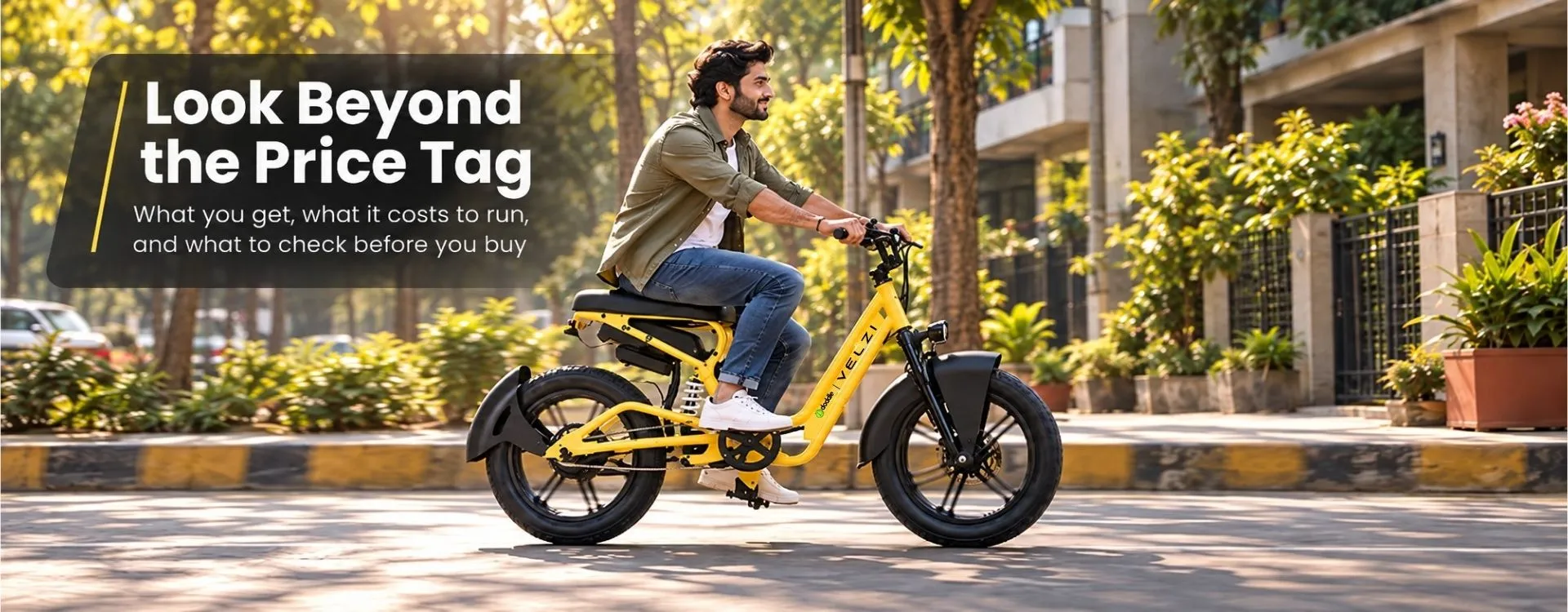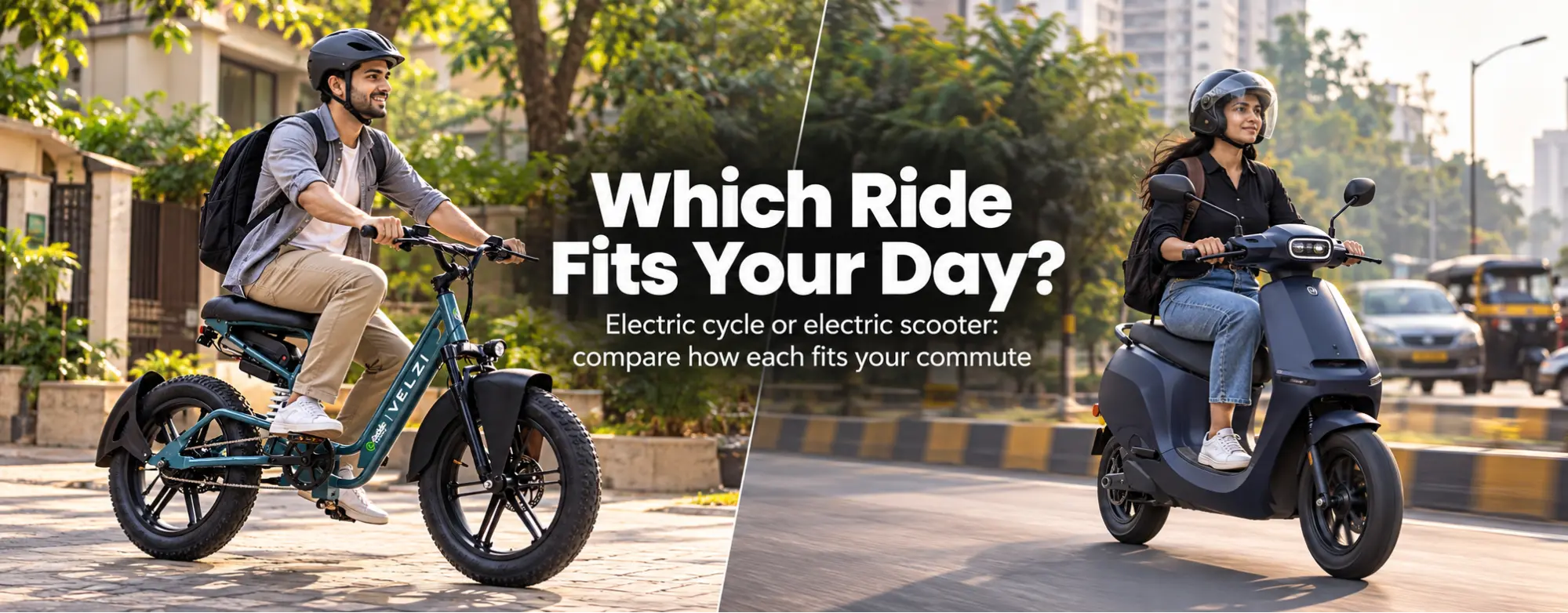
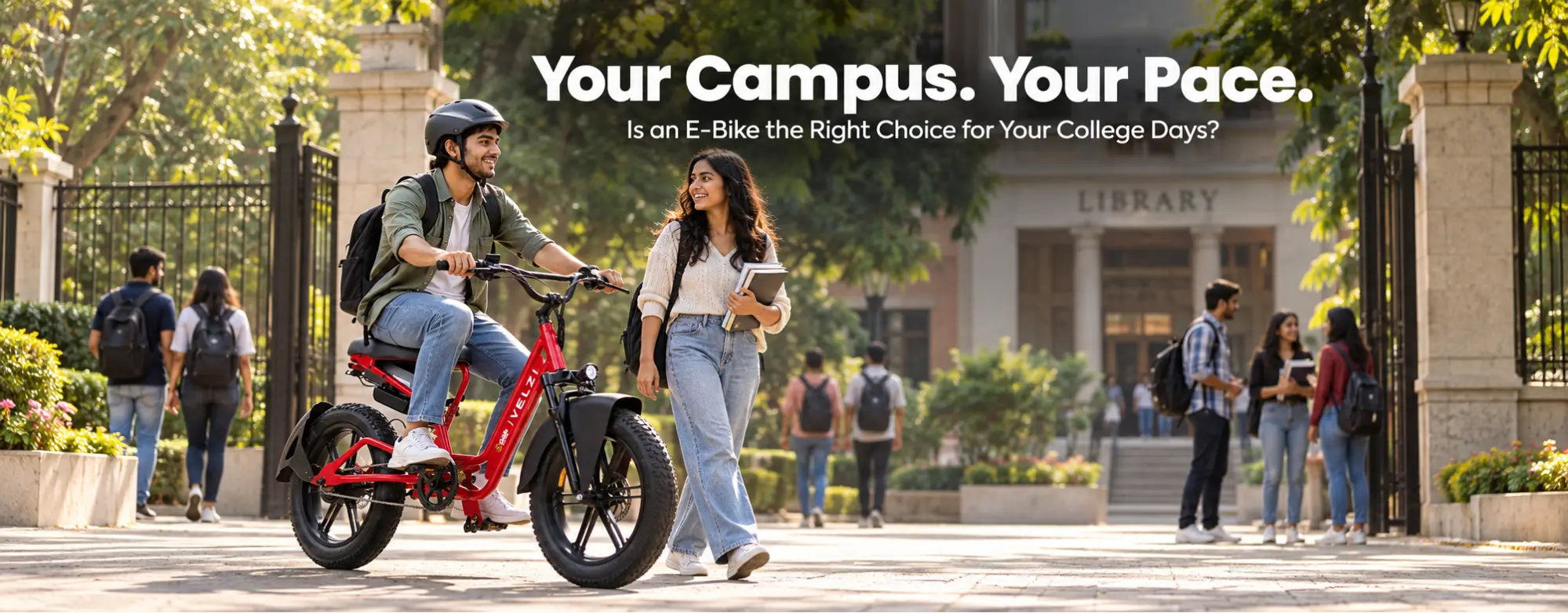
An electric cycle for college students can solve a surprisingly large number of everyday problems at once: expensive auto fares, crowded buses, long walks from stations, limited campus parking and the need to depend on family for short-distance transport. For students travelling a few kilometres to class, coaching, internships, libraries, cafés or hostels, an e-cycle can provide independent mobility without the fuel expense of a petrol two-wheeler.
But not every student needs one, and not every e-cycle suits student life. The right choice depends on commute distance, charging access, campus rules, road conditions, security, budget and whether the rider wants pure transport or also values light physical activity. Battery removability can be more useful in a hostel than a very high top speed. A comfortable seat and suspension can matter more than flashy styling when the daily route includes potholes.
This guide explains what to look for in an electric bicycle for college students, how to estimate monthly cost, what makes a model practical for Indian campuses and where Doddle Velzi fits for students who need a daily commuter rather than a recreational bicycle.
Why Electric Cycles Make Sense for Students
College travel is usually made of multiple short trips rather than one long journey. A student might ride from home to campus, cross the campus to another building, go to a library or cafe and return later. Paying for autos or app cabs several times a day adds up quickly. Public transport is cheaper but may not cover the last mile conveniently.
- Low electricity cost compared with daily auto or fuel spending.
- Compact parking footprint on crowded campuses.
- Option to pedal when battery assistance is not needed.
- No waiting for cabs or fixed bus schedules for short trips.
- Removable batteries can be charged in a hostel room or at home when allowed.
- Useful for internships, coaching classes and errands beyond the campus gate.
What Is the Ideal Student Commute Distance for an E-Cycle?
For many students, an e-cycle is most attractive when the one-way commute is roughly 3–15 km. Below that, a normal bicycle may already be enough if the terrain is easy. Above that, an e-cycle can still work, but road type, weather, time and range become more important. A 20 km one-way route may be comfortable on a protected or low-speed corridor but tiring or unsafe on a high-speed highway.
| One-way distance | How an e-cycle fits | What to prioritise |
| Under 3 km | Convenient, but a normal cycle may also be sufficient | Security, ease of parking |
| 3–8 km | Excellent use case | Comfort, battery removability, brakes |
| 8–15 km | Strong daily-commute use case | Range, tyres, suspension, charging |
| 15–25 km | Possible with the right route and battery | Real-world range, weather, travel time |
| 25+ km | Needs careful route planning | Range reserve, charging access, road safety |
Do Students Need 80+ km?
Not every student needs the maximum possible range, but extra range creates convenience. If a student rides 12 km per day, a larger battery can mean charging only a few times a week instead of every night. It also provides a reserve for unexpected trips, detours and gradual battery ageing.
Velzi is listed for up to 85 km on pedal assist and up to 45 km on throttle. For student use, pedal assist is often the smarter mode because it extends range and keeps some physical activity in the commute. Actual range varies with rider weight, road gradient, weather, tyre pressure and assistance level.
One of the Most Useful Student Features
Hostel and apartment parking areas often lack charging sockets. A removable battery solves this by letting the student leave the cycle parked and carry only the battery to a room or indoor charging point. Velzi uses a removable 48V 13Ah battery with an approximately 4–5 hour charge time.
Before buying any e cycle for students, ask where the battery can be charged safely. Some hostels or campuses have specific policies for charging personal electrical devices, so students should follow local rules rather than assuming charging is permitted anywhere.
Licence and Registration Considerations
For younger college riders and families, regulatory simplicity is a major attraction. Low-speed electric cycles built around a 250W motor and 25 km/h assisted speed are generally positioned in India as the category that does not require the standard licence and registration process of higher-speed motor vehicles. Velzi uses these specifications.
Students should still follow traffic rules, wear appropriate safety gear and verify any campus-specific riding restrictions. A vehicle being low-speed does not remove the need for responsible road behaviour.
Comfort Matters More Than Students Expect
A five-minute test ride can hide problems that appear after 30 minutes. Students may carry laptops, books, water bottles and bags while riding on rough roads. A harsh frame, narrow tyres or poor seating position can turn a practical purchase into something the student avoids using.
Velzi’s 20×4 fat tyres, cushioned seat, front suspension and rear mono shocks are designed to make mixed urban roads easier to handle. When evaluating the best electric cycle for students, test it with the same backpack and approximate load used on a normal college day.
Safety Features to Prioritise
| Feature | Why it matters for students |
| Reliable front and rear brakes | Stop-start traffic and unpredictable campus roads |
| Headlight and taillight | Evening classes, internships and winter visibility |
| Horn/bell | Useful in mixed pedestrian/vehicle areas |
| Stable tyres | Better confidence on potholes, gravel and wet roads |
| Digital display | Helps track battery level and ride status |
| Walk Assist | Useful in parking areas, ramps and crowded campus zones |
A helmet and visible clothing are still important even at low speeds. Night riders should check that lights are working before every trip, and students should avoid using headphones that block surrounding traffic sounds.
What Does an Electric Cycle Cost a Student Per Month?
Electricity is usually a very small part of the monthly cost. Velzi’s 624Wh battery uses less than 1 kWh for a full charge after allowing for normal charging loss. At an illustrative electricity rate of ₹8 per unit, a full charge may cost around ₹5–₹6. A student charging eight times in a month could spend roughly ₹45 on electricity.
The more meaningful comparison is with the student’s current travel spending. If autos, bike taxis or fuel cost several thousand rupees per month, an e-cycle can shift much of that spending into a one-time purchase plus low electricity and routine maintenance. The payback depends completely on the student’s existing travel pattern and how often the e-cycle is actually used.
| Expense | Electric cycle student use | What to remember |
| Electricity | Usually tens to low hundreds of rupees/month | Depends on local tariff and charging frequency |
| Routine maintenance | Low; mainly tyres, chain and brakes | More if roads are rough or usage is high |
| Parking | Often free on campus, but varies | Use a strong lock |
| Fuel | None | Pedalling can extend range further |
| App cabs/autos | Can reduce substantially | Savings depend on how many trips are replaced |
The Student Ownership Issue Nobody Should Ignore
A college campus has high foot traffic, and an attractive e-cycle can be a theft target. Budget for a high-quality lock and use designated parking whenever possible. Lock the frame to a fixed object, not just the wheel. If the battery is removable, take it with you when parking for long periods where practical.
Record the cycle’s serial number, keep the invoice and take clear photographs after purchase. These simple steps help with ownership documentation if the cycle is lost or damaged.
Student Use Cases Beyond the College Gate
- Home or hostel to college commute.
- Last-mile travel from railway/metro station to campus.
- Coaching classes and exam centres.
- Internships and part-time work within the city.
- Library, gym, cafe and grocery trips.
- Weekend local travel without depending on family transport.
When an Electric Cycle May Not Be the Right Choice
An electric cycle is not automatically the best choice for every student. If the route is dominated by high-speed highways, has no safe shoulder, involves very long distances, or the student regularly needs to carry a passenger, another mode of transport may be more appropriate. Similarly, a hostel that prohibits battery charging and offers no alternative charging point can make ownership inconvenient.
The best electric bicycle for students is therefore the one that fits the route and lifestyle—not the model with the longest specification list.
Student Buying Checklist
- Map the actual daily distance for one full week.
- Check whether the battery can be removed and charged indoors.
- Test ride on a rough road, not only a smooth showroom floor.
- Check brake feel with your normal backpack weight.
- Confirm battery, motor and frame warranty.
- Ask about replacement battery and spare-parts availability.
- Budget for a strong lock, helmet and basic rain protection.
- Confirm campus/hostel parking and charging rules before purchase.
Why Doddle Velzi Can Fit College Use
Velzi combines several features that matter to students: a removable 48V 13Ah battery, up to 85 km PAS range, 250W motor, 25 km/h maximum speed, fat tyres, suspension, disc brakes, lights, digital display and multiple riding modes. Its current listed price is ₹54,999 including shipping and taxes.
For a student with a regular 5–15 km daily commute, the large PAS range can reduce charging frequency, while the removable battery helps when the parking area does not have a socket. The fat-tyre and suspension setup is also relevant in cities where the route combines campus roads, potholes and broken side streets.
Electric Cycle vs Public Transport for Students
| Factor | Electric cycle | Bus/train/metro |
| Schedule | Leave when you want | Fixed frequency/timetable |
| Last mile | Direct point-to-point | Often needs walking/auto |
| Monthly cost | Low after purchase | Low to moderate, route dependent |
| Crowding | Private ride | Can be crowded at peak time |
| Weather exposure | High | Lower on covered systems |
| Exercise | Yes, if pedalling/PAS used | Minimal |
| Long-distance suitability | Limited by route/range | Better for longer corridors |
A Practical Mobility Tool for the Right Student
An electric cycle for college students works best when it replaces repeated short trips that are currently expensive, inconvenient or dependent on others. The strongest use case is a student with a predictable daily route, safe parking, indoor battery charging access and mostly urban roads.
Instead of asking only which is the best electric cycle for students, ask five practical questions: How far will I ride? Where will I charge? Where will I park? What are my roads like? How much do I currently spend on travel? If those answers line up, an e-cycle can become one of the most useful purchases of the college years.
Ready to test ride the Velzi on your own route?
Book A Free Demo Ride | Check EMI Options | Know Your Velzi Electric Cycle
Frequently Asked Questions About Electric Cycle for College Students
Is an electric cycle good for college students?
Yes, especially for short-to-moderate daily trips where the student wants low running cost, independent travel and easy parking. Route safety and charging access should be checked before purchase.
What is the best electric cycle for students?
The best model is one that fits the student’s commute distance, road conditions, charging setup, comfort needs and budget. Prioritise reliable brakes, practical range, a removable battery, service support and safe tyres over cosmetic features.
Do college students need a licence for an electric cycle?
Low-speed electric cycles using a 250W motor and limited to 25 km/h are generally treated differently from higher-speed motor vehicles in India and are commonly sold without standard licence/registration requirements. Verify current rules and the exact product specification at purchase.
How much does it cost to charge an e-cycle for students?
Charging cost is usually only a few rupees per full charge because an e-cycle battery is well below the size of an electric-scooter battery. Monthly electricity spend often remains in the tens or low hundreds of rupees depending on usage and local tariff.
Can I charge an electric cycle in a hostel room?
A removable battery makes indoor charging physically possible, but the hostel or college may have its own electrical-safety rules. Students should get permission and use only the approved charger in a dry, ventilated location.
Is an electric bicycle for college students safe in rain?
Light rain can be manageable on a properly designed e-cycle, but deep flooding should be avoided. Keep charging ports dry, reduce speed, increase braking distance and dry/lubricate the drivetrain after wet rides.
How much range should a student look for?
Choose a range that comfortably covers at least a full normal day with reserve. If your daily ride is 15 km, buying exactly 15 km of claimed range would be impractical. Larger reserve reduces range anxiety and charging frequency.
Is Doddle Velzi suitable for college commuting?
Velzi is designed for everyday city travel and offers a removable 48V 13Ah battery, up to 85 km PAS range, 250W motor, fat tyres, suspension and disc brakes. Suitability still depends on the student’s specific route, parking and budget.