
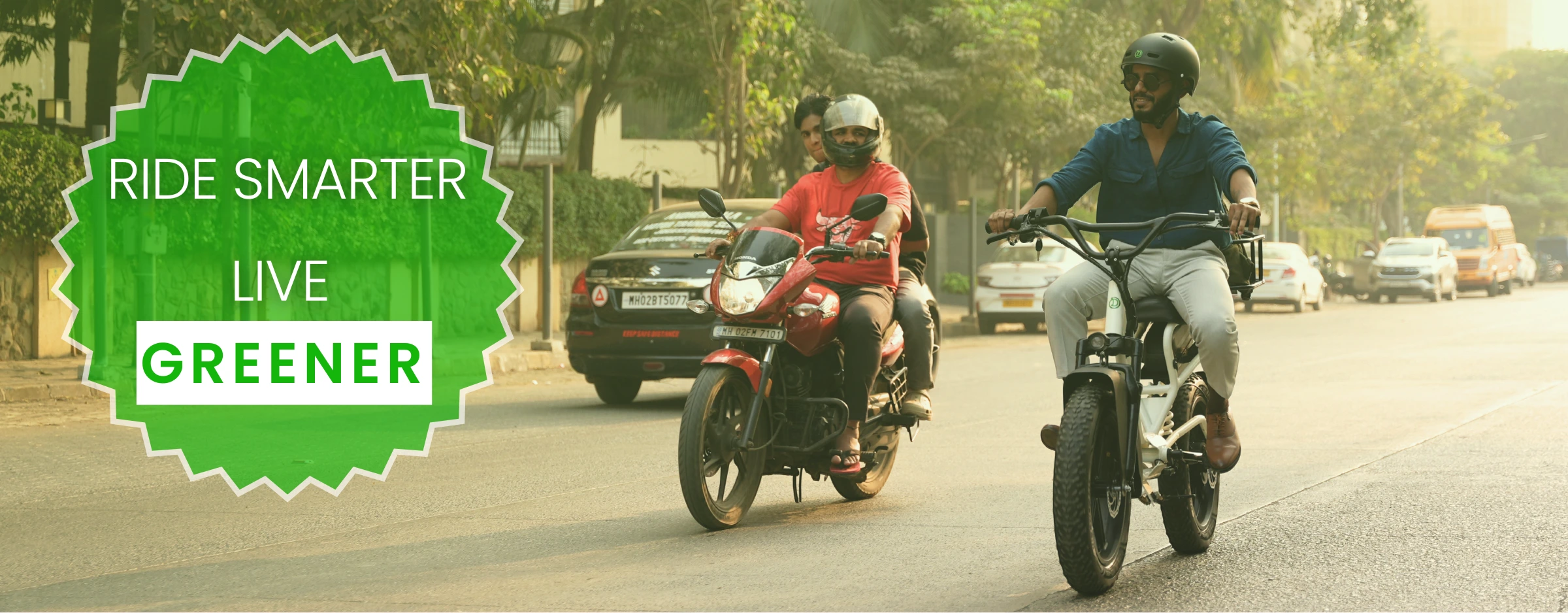
Electric bicycle ownership in India has crossed a historic milestone in 2026. With over 1.7 million electric two-wheelers sold in the first half of the year alone — according to the Society of Indian Automobile Manufacturers (SIAM) — the quiet hum of an e-cycle is fast replacing the roar of petrol engines on Indian streets.
From Bengaluru’s IT corridors to the narrow lanes of Varanasi, from Pune’s college campuses to the delivery networks of Tier 2 cities, the electric bicycle is no longer a novelty. It is a necessity. And leading this transformation is Doddle, India’s trusted electric cycle manufacturer, committed to building smarter, greener, and more affordable mobility solutions for every Indian rider.
This article unpacks why the electric bicycle is India’s future, what the numbers say, and how Doddle is helping millions of Indians ride into that future — today.
Why Are EV Cycles Gaining Popularity in India in 2026?
Electric bicycles are gaining popularity in India for a combination of economic, environmental, and infrastructural reasons that align perfectly with where the country is headed.
India’s urban population is expected to hit 600 million by 2030, according to NITI Aayog’s Urban Mobility Report. As cities grow denser, traditional commuting — whether by car, two-wheeler, or auto — is becoming slower, costlier, and more polluting. The electric bicycle offers a compelling alternative: zero emissions, near-zero running costs, and the freedom to skip traffic entirely.
Key drivers fueling the EV cycle boom include:
• Fuel prices: Petrol prices in metro cities crossed ₹110 per litre in 2026, making daily commuting prohibitively expensive for millions.
• Air quality crisis: 12 of India’s 15 most polluted cities globally are in India (IQAir 2025 World Air Quality Report), creating strong public demand for cleaner transport.
• Government push: FAME III (Faster Adoption and Manufacturing of Hybrid & Electric Vehicles) has allocated ₹10,000 crore for EV subsidies through 2028.
• Rising awareness: India’s youth — especially Gen Z and millennials — increasingly factor sustainability into purchasing decisions.
According to Doddle’s 2026 India EV Insights, searches for ‘electric cycle near me’ and ‘buy electric bicycle online’ have grown by 340% year-on-year across Tier 1 and Tier 2 markets, signalling a market that is ready and hungry.
How Does an Electric Bicycle Reduce Daily Commuting Costs?
What Is the Running Cost of an Electric Bicycle vs a Petrol Bike?
Electric bicycle running costs are dramatically lower than petrol-powered alternatives — and the gap is widening every year as fuel prices rise.
Here is a clear cost comparison for a typical Indian commuter travelling 30 km per day (based on 2026 market rates):
• Petrol bike (100cc): ~₹2.80/km → ₹84/day → ₹2,520/month → ₹30,240/year
• Electric bicycle (Doddle): ~₹0.18/km → ₹5.40/day → ₹162/month → ₹1,944/year
• Annual savings with Doddle EV cycle: ₹28,296 — every single year
Beyond fuel, petrol bikes require engine oil changes (₹400–₹600 every 2,000 km), air filter replacements, and clutch servicing. Electric bicycles have no engine oil, no clutch, and no exhaust system, reducing maintenance bills significantly.
Doddle’s advanced battery technology ensures that a full charge (costing ₹8–₹12 on a standard home socket) delivers 60–80 km of real-world range — making it perfectly suited to the average Indian daily commute of 20–35 km.
How Long Does an Electric Bicycle Battery Last in India?
What Is the Battery Replacement Cost for an EV Cycle?
Electric bicycle batteries are the most important component of any EV cycle, and Indian buyers rightly want to know how long they last — and what replacement costs look like.
Here is what you need to know about EV cycle battery performance in 2026:
• Battery lifespan: Lithium-ion batteries used in quality EV cycles (including Doddle models) typically last 800–1,000 full charge cycles, equivalent to 3–5 years of daily use.
• Real-world range: 60–80 km per charge under standard load; 45–55 km in hilly terrain or under heavier cargo.
• Charging time: 3–5 hours for a full charge using a standard 5A socket at home.
• Battery replacement cost (2026 estimate): ₹8,000–₹18,000 for a 36V/48V lithium-ion pack, depending on capacity (Ah) and brand.
• Doddle’s battery warranty: 2-year warranty on battery packs with dedicated service support across 200+ cities in India.
At Doddle, we design our battery management systems (BMS) to protect cells from overcharging, temperature spikes, and deep discharge — three of the most common causes of premature battery degradation in Indian conditions.
Compared to the lifetime cost of petrol, even factoring in a one-time battery replacement, the total cost of ownership of a Doddle EV cycle remains dramatically lower over a 5-year period.
Who Should Buy an Electric Bicycle in India?
Electric bicycles in India are no longer just for the eco-conscious urban professional. The 2026 rider profile is diverse, practical, and growing rapidly.
Here are the key segments embracing EV cycles across India:
• Urban commuters: Office-goers in metros spending ₹3,000–₹6,000/month on Ola, Uber, or petrol can recover their EV cycle investment in 6–10 months.
• Students: College students in cities like Pune, Hyderabad, and Ahmedabad use EV cycles as affordable, independent daily transport — with no licence required for cycles under 250W.
• Delivery professionals: Hyperlocal delivery partners for Zomato, Swiggy, Dunzo, and Zepto are increasingly switching to EV cycles to eliminate fuel costs and increase daily earnings.
• Tier 2 & Tier 3 residents: In cities like Nashik, Coimbatore, Rajkot, and Bhopal, where public transport is limited, the EV cycle fills a critical last-mile gap affordably.
• Senior citizens & fitness riders: Pedal-assist (PAS) modes on Doddle models make cycling accessible to older adults and those rebuilding fitness after illness.
At Doddle, we design each product range with these varied riders in mind — from our entry-level commuter series priced at ₹24,999 to our premium long-range delivery-optimised models at ₹49,999 — ensuring there is a Doddle for every Indian, every budget, and every road.
How Is India’s EV Policy Shaping the Future of Electric Bicycles?
Electric bicycle adoption in India is being actively accelerated by one of the world’s most ambitious national EV policies, with 2026 marking a turning point in real-world implementation.
Key policy milestones reshaping India’s EV landscape include:
• National EV Policy 2024: India set a target of 30% EV penetration for two-wheelers by 2030, with the Ministry of Road Transport and Highways (MoRTH) actively supporting ecosystem development.
• BIS certification mandate: Standardisation of EV components, including batteries and chargers, is improving safety and reliability across the market.
• Charging infrastructure: The government plans 10,000 new public EV charging stations by end of 2026, with private players like TATA Power and Adani Green also expanding networks.
• EV-friendly urban planning: Smart Cities Mission projects in 50+ Indian cities now include dedicated EV cycle lanes and shared cycle docking stations.
India’s EV story is no longer just about cars. NITI Aayog’s 2026 Mobility Report specifically highlights two-wheelers and cycles as the fastest-growing and most impactful segment for urban decarbonisation — precisely the space where Doddle operates and leads.
People Also Ask: Quick Answers About Electric Bicycles in India
What is the price of a good electric bicycle in India in 2026?
A reliable electric bicycle in India is priced between ₹22,000 and ₹55,000 in 2026, depending on range, motor power, and features. After government subsidies (FAME III + state schemes), the effective price can drop by ₹15,000–₹35,000. Doddle’s range starts at ₹24,999.
How much does it cost to charge an electric bicycle?
Charging an e-cycle costs ₹8–₹12 for a full charge on a standard home socket in India (at average electricity rates of ₹7–₹9/kWh in 2026). This covers 60–80 km of real-world range.
Is a licence required to ride an electric bicycle in India?
No licence or registration is required for electric bicycles with a motor output of 250W or less and a top speed under 25 km/h, as per the Motor Vehicles Act. This covers most entry-level and mid-range EV cycles sold in India, including several Doddle models.
What is the mileage of an electric bicycle per charge?
Most quality e-cycles offer 50–80 km per full charge in real-world Indian conditions. Mileage varies with rider weight, terrain, speed, and assist mode. Doddle’s models are tuned to deliver consistent range across India’s diverse road and climate conditions.
Conclusion: The Green Revolution Is Riding Through India — Are You On It?
Electric bicycles are not a distant promise — they are a present-day reality transforming how India moves, breathes, and saves money. With rising fuel costs, worsening air quality, and government incentives making e-cycles more affordable than ever, 2026 is the year to make the switch.
Whether you are a student in Pune, a delivery rider in Chennai, a daily commuter in Delhi, or a weekend cyclist in Jaipur — there is an electric bicycle that fits your life and your budget.
At Doddle, we believe clean mobility should not be a luxury. It should be a right. Explore India’s finest range of electric cycles at Doddle.in and take your first ride toward a smarter, greener India.
Frequently Asked Questions (FAQ)
Q1. What is the best electric bicycle to buy in India in 2026?
The best electric bicycle depends on your use case. For daily commuting under 40 km, entry-level models (₹22,000–₹30,000) work well. For longer ranges or delivery use, mid-range models (₹35,000–₹55,000) with larger batteries are ideal. Doddle offers models across both segments with pan-India service support.
Q2. How do I maintain an electric bicycle in India?
Electric bicycle maintenance is minimal. Key tasks include: charging the battery regularly (avoid full discharge), checking tyre pressure weekly, lubricating the chain monthly, and getting an annual service (cost: ₹500–₹1,200 at authorised centres). Unlike petrol bikes, there is no engine oil or carburettor to service.
Q3. Can I get a subsidy on an electric bicycle under FAME III?
Yes. Under FAME III (2024–2028), eligible electric bicycles can attract central subsidies of ₹5,000–₹15,000. Additional state-level subsidies of ₹2,000–₹10,000 are available in Maharashtra, Delhi, Gujarat, Tamil Nadu, and other states. Total effective discount can reach ₹25,000–₹35,000.
Q4. How far can an electric bicycle go on a single charge in India?
Most quality electric bicycles deliver 50–80 km per full charge in Indian conditions. Doddle’s models are specifically calibrated for Indian roads, temperatures, and traffic patterns, consistently delivering 60–75 km of real-world range per charge cycle.
Q5. Is an electric bicycle good for hilly terrain in India?
Yes, modern electric bicycles with 250W–350W hub motors handle moderate inclines well. For cities like Shimla, Shillong, or Pune’s hilly suburbs, models with higher torque motors and pedal-assist systems (PAS) are recommended. Expect 15–25% range reduction on sustained gradients.
Q6. Where can I buy a Doddle electric bicycle in India?
You can explore and purchase Doddle electric cycles directly at doddle.in. Doddle also has a growing dealer and service network across 200+ cities, including metro cities and Tier 2 and Tier 3 towns across India.