
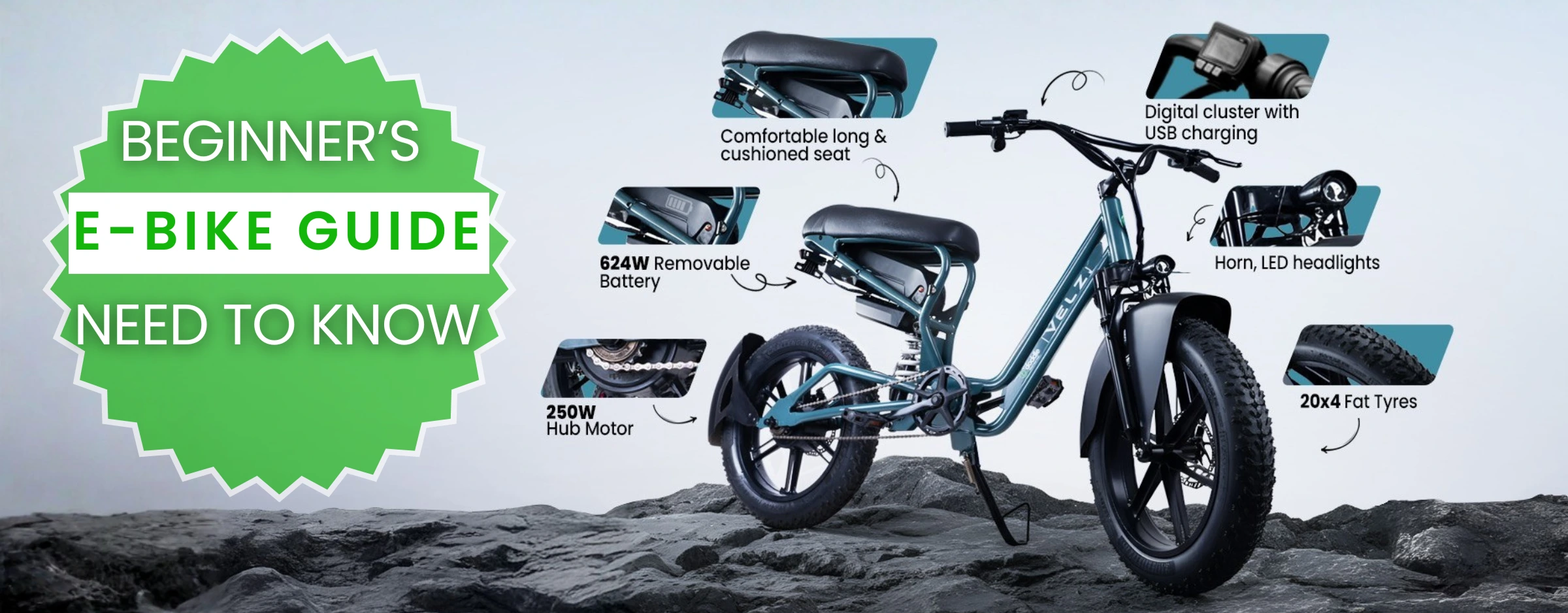
Electric e-bikes are quietly transforming the way India commutes – and for very good reason. With fuel prices stubbornly high, urban congestion worsening every year, and a generation of eco-conscious riders demanding cleaner alternatives, the electric bicycle has evolved from a curiosity into a genuinely smart commuting choice for millions of Indians across metro cities, Tier 2 towns, and beyond.
Electric e-bikes represent the fastest-growing segment of India’s personal mobility market. According to IMARC Group (February 2026), India’s e-bike market was valued at USD 1,420 million in 2025 and is projected to nearly double to USD 3,007 million by 2034, growing at a CAGR of 8.69%. The shift is already well underway – and 2026 is the smartest year yet to be part of it.
Whether you are a first-time rider or a working professional ready to cut commuting costs, Doddle’s electric e-bikes are built specifically for Indian roads, Indian riders, and Indian budgets. This complete beginner’s guide covers everything – from how e-bikes work to what they cost to run – so you can make your decision with full confidence.
What Exactly Is an Electric E-Bike, and How Does It Work?
Electric e-bikes are bicycles fitted with a battery-powered electric motor that assists your pedalling effort, making riding faster, easier, and far less tiring. Unlike electric scooters, most e-bikes still require you to pedal – the motor simply amplifies your effort, letting you cover longer distances and tackle inclines without exhaustion.
The three main types of electric e-bikes you will encounter in India:
• Pedal-Assist (Pedelec): The motor engages only when you pedal. This is the most popular type in India, commanding an 82% market share (IMARC Group, 2025) for its ideal balance of fitness, range, and economy.
• Throttle-Assist: A twist or thumb throttle activates the motor without pedalling – closer to a scooter experience. Popular for urban delivery and utility riding.
• Speed Pedelec: Capable of higher assisted speeds, this sub-segment is growing fast among tech-savvy urban commuters who want performance alongside efficiency.
At Doddle, we design our electric e-bikes to seamlessly blend the health benefits of cycling with the practical convenience of electric assist – so every rider gets exactly the kind of support they need, on every kind of road India offers.
Why Are Electric E-Bikes Gaining So Much Popularity in India in 2026?
Electric e-bikes are surging in popularity across India because they solve real, daily problems. The economic logic is compelling, the environmental benefits are measurable, and the ride experience has improved dramatically thanks to advances in battery and motor technology.
The primary drivers fuelling India’s electric e-bike revolution:
• Soaring fuel costs: Petrol prices across Indian metro cities ranged from ₹99 to ₹108 per litre in early 2026, placing severe financial pressure on middle-income daily commuters.
• Worsening urban traffic: Cities like Bengaluru, Delhi, and Mumbai consistently rank among the world’s most congested. An e-bike cuts through these lanes far more efficiently than four-wheelers or petrol two-wheelers.
• Strong government support: The Government of India’s PM E-DRIVE scheme (October 2024 – March 2026) provides direct purchase incentives for electric two-wheelers, with a total outlay of ₹10,900 crore.
• Better, more affordable technology: Lithium-ion battery costs have fallen approximately 70% over the last decade (Mordor Intelligence, 2025), making e-bikes more capable and accessible than ever before.
• Health and wellness awareness: Rising interest in active lifestyles has made the workout-commute balance of a pedal-assist e-bike highly attractive to urban professionals and students alike.
According to Doddle’s 2026 India EV insights, adoption is accelerating fastest not just in metros but in Tier 2 and Tier 3 cities – where public transport gaps are widest and the daily financial burden of petrol is felt most sharply.
How Much Does It Cost to Own and Run a Doddle Electric E-Bike?
Electric e-bikes from Doddle are designed to deliver outstanding long-term value for Indian riders. The real cost advantage is not just in the purchase price – it is in what you save every single month once you start riding.
Charging a Doddle e-bike to full costs between ₹7 and ₹15 depending on your state electricity tariff – enough to cover 60 to 80 kilometres. That means a typical 20-km daily round trip costs less than ₹3 in electricity. Compare that to spending over ₹100 on petrol for the same distance on a conventional scooter.
Doddle E-Bike Running Cost Snapshot (2026)
| Cost Factor | Doddle Electric E-Bike |
| Full charge cost | ₹7 – ₹15 (state tariff dependent) |
| Cost per 20-km round trip | Under ₹3 in electricity |
| Monthly running cost (avg. 1,200 km) | ₹170 – ₹200 |
| Annual saving vs petrol commuter | ₹20,000 – ₹35,000 |
| Doddle annual servicing cost | ₹1,500 – ₹3,000 |
| Doddle battery replacement (4–5 yrs) | ₹8,000 – ₹15,000 |
Doddle’s advanced battery technology ensures that every lithium-ion cell is engineered for India’s demanding climate – handling heat, humidity, and the daily stress of stop-start urban riding. Most Doddle riders report battery health remaining above 80% efficiency even after 1,000+ full charge cycles, meaning years of dependable, low-cost riding before a replacement is ever needed.
For delivery professionals covering 80 km a day, the savings are even more compelling. Switching to a Doddle e-bike saves approximately ₹4,000–5,000 every month in fuel and maintenance costs – putting over ₹50,000 back in a rider’s pocket every year.
How Far Can I Ride on One Charge? What Is the Battery Life of a Doddle E-Bike?
Electric e-bikes from Doddle are built to handle real Indian commuting distances with ease. Doddle’s lithium-ion battery packs deliver a real-world range of 60 to 80 kilometres per full charge – more than enough for the average daily urban commute of 15 to 30 kilometres, with charge to spare.
Factors that affect your Doddle e-bike’s range on a given day:
• Assist mode selected: Doddle’s eco mode maximises range; sport mode delivers faster acceleration at a modest reduction in range.
• Terrain: Flat city roads maximise efficiency. Steep inclines and heavy cargo will reduce range slightly, as on any e-bike.
• Rider weight and speed: Higher speeds and heavier loads draw more from the battery. Doddle’s range estimates are calculated for typical Indian rider conditions.
• Battery health over time: Doddle’s cells retain over 80% capacity after 1,000+ charge cycles – equivalent to 3 to 5 years of normal daily use before any meaningful degradation.
When the time eventually comes for a battery replacement, Doddle provides a transparent, no-hidden-cost replacement service priced at ₹8,000 to ₹15,000 – a fraction of what engine work costs on a petrol vehicle. Doddle’s battery warranty terms are clearly communicated at the time of purchase, so there are no surprises down the road.
Do I Need a Driving Licence or Registration to Ride a Doddle Electric E-Bike?
Electric e-bikes with a motor rating below 250 watts and a top speed below 25 km/h are classified as “cycles” under Indian motor vehicle law. These models require no driving licence, no registration, and no insurance under current regulations – making them one of the most accessible forms of personal mobility in India today.
Higher-power models (above 250W or top speed above 25 km/h) are classified as motor vehicles and require standard registration and a valid driving licence. Doddle clearly specifies the motor rating and speed classification for every model so you always know exactly what applies to your ride before you buy.
Quick legal reference for Doddle e-bike riders in India (2026):
| Motor Power / Top Speed | Licence & Registration Needed? |
| Below 250W / Below 25 km/h | No – classified as a cycle |
| Above 250W / Above 25 km/h | Yes – classified as a motor vehicle |
| Insurance | Optional below threshold; mandatory above |
| Age restriction | None below threshold; 18+ above |
Who Is a Doddle Electric E-Bike Built For?
Electric e-bikes from Doddle are engineered to serve a wide range of Indian riders – each with different commuting needs, different budgets, and different city realities. Here is how Doddle fits into the lives of the people who ride it every day.
• Daily Office Commuters: A 10–25 km round trip on a Doddle e-bike costs less than ₹3 in electricity. Arrive fresh, skip fuel queues, and never worry about parking again.
• Students: No licence needed for low-speed Doddle variants. Low maintenance costs and flexible EMI options make Doddle one of the most accessible commuting solutions for college-goers across India.
• Delivery Professionals: Doddle e-bikes are built for the durability that last-mile logistics demands. Riders covering 60–80 km daily save ₹4,000–5,000 per month in running costs – over ₹50,000 every year – compared to petrol alternatives.
• Eco-Conscious Riders: Every 100 km ridden on a Doddle e-bike instead of a petrol scooter saves approximately 2.5 kg of CO₂. Doddle riders across India collectively make a measurable contribution to cleaner urban air every day.
• Tier 2 & Tier 3 Town Residents: Doddle is actively expanding its service network into cities like Nashik, Coimbatore, Rajkot, Vadodara, and Indore – bringing clean, affordable mobility to communities where public transport gaps are widest.
• Fitness and Wellness Enthusiasts: Doddle’s pedal-assist modes let you choose your effort level every day – getting a real cardiovascular workout when you want it, or gliding effortlessly when you need to arrive fresh.
Why Choose Doddle? What Sets Our Electric E-Bikes Apart?
Electric e-bikes vary widely in quality, durability, and after-sales support. At Doddle, we built our brand on three commitments that matter most to Indian riders: purpose-built engineering, honest ownership costs, and service you can count on.
• Engineered for India’s Roads: Every Doddle frame, suspension system, and battery casing is tested against real Indian conditions – potholes, speed breakers, monsoon humidity, and summer heat. We do not import and rebadge; we design and build for India from the ground up.
• Transparent Ownership Costs: Doddle publishes clear servicing schedules, battery warranty terms, and replacement cost estimates upfront. There are no surprise charges after purchase. What you see is what you pay, for the life of the bike.
• Nationwide Service Network: Doddle’s service centres are operational across 15+ Indian states and growing – with a focus on Tier 2 and Tier 3 towns where other brands often leave riders unsupported.
• Smart Riding Technology: Doddle e-bikes come equipped with multiple assist modes, battery level monitoring, and anti-theft alerts – so you stay informed and in control wherever you ride.
• Subsidy-Ready Models: All eligible Doddle models are PM E-DRIVE certified, meaning your subsidy is applied automatically at the dealership – no chasing paperwork, no delays.
The Road Ahead: Why 2026 Is the Best Year to Start Riding with Doddle
Electric e-bikes are no longer the future of urban mobility in India – they are the present. With a market set to reach USD 3 billion by 2034, government subsidies still active, and battery technology more dependable than ever, there has never been a smarter moment to make the switch.
Doddle exists to make that switch easy, affordable, and genuinely rewarding for every kind of Indian rider – whether you are navigating Bengaluru tech corridors, Jaipur market lanes, or Nagpur college campuses.
Zero fuel costs. Zero emissions guilt. 100% freedom to ride. Explore Doddle’s full range of electric e-bikes and find the model that fits your life, your city, and your commute – and start riding smarter today.
Frequently Asked Questions (FAQ)
People Also Ask about Doddle electric e-bikes in India:
How much does it cost to charge a Doddle electric e-bike?
Charging a Doddle e-bike to full costs between ₹7 and ₹15 depending on your state electricity tariff. This covers a real-world range of 60 to 80 kilometres – meaning a typical 20-km daily round trip costs less than ₹3 in electricity.
How far can I ride on a single charge on a Doddle e-bike?
Doddle e-bikes deliver a real-world range of 60 to 80 kilometres per full charge under typical Indian urban riding conditions. Actual range varies with assist mode, terrain, rider weight, and ambient temperature.
Do I need a driving licence to ride a Doddle electric e-bike?
No licence or registration is required for Doddle e-bike models with motors below 250 watts and a top speed below 25 km/h. These are legally classified as cycles under Indian motor vehicle law. Doddle clearly specifies the classification for each model on its product pages.
What is the battery replacement cost for a Doddle e-bike?
Doddle offers transparent battery replacement priced at ₹8,000 to ₹15,000, typically needed after 4 to 5 years or 1,000+ charge cycles. All replacement costs and warranty terms are clearly communicated at the time of purchase – no hidden charges.
Does a Doddle e-bike qualify for government subsidy in India?
Yes. All eligible Doddle e-bike models are PM E-DRIVE certified, qualifying for central incentives of up to ₹10,000. The subsidy is applied automatically at the dealership via Aadhaar-linked e-voucher. Additional state subsidies of ₹5,000 to ₹25,000 may also apply depending on your home state.
What is the annual servicing cost of a Doddle electric e-bike?
Annual servicing for a Doddle e-bike typically costs ₹1,500 to ₹3,000 – significantly less than petrol two-wheelers that require regular oil changes, filter replacements, and mechanical work. Doddle’s e-bikes have far fewer moving parts, translating to lower and more predictable maintenance costs year after year.