
What Is an Electric Cycle?
An electric cycle – also called an e-bike or e-cycle – is a regular bicycle fitted with a small electric motor, a rechargeable battery, and a controller that assists your pedaling. Unlike an electric scooter or electric motorcycle, an electric cycle still requires you to pedal; the motor simply reduces the effort needed, especially on inclines, in traffic, or over long distances.
In India, most electric cycles fall under a specific regulatory category: motors up to 250W and top speeds up to 25 km/h. This classification matters because it determines whether you need a license, registration, or insurance – a question covered in detail later in this guide.
For daily commuters, students, and delivery professionals, electric cycles offer a middle ground between a traditional bicycle (physically demanding, slower) and a petrol scooter (higher cost, requires licensing, adds to pollution and traffic congestion).
Electric Cycle vs E-Bike vs Electric Scooter: Clearing Up the Confusion
These terms get used interchangeably in India, which creates confusion for first-time buyers. Here’s the actual distinction:
Electric Cycle / E-Cycle A bicycle with pedal-assist motor support. You pedal; the motor helps. Lightweight, no registration required (under 250W/25kmh), lowest running cost.
E-Bike Technically the same as an electric cycle in most Indian usage – “e-bike” is simply the more commonly searched, internationally recognized term for the same product category. Some usage of “e-bike” internationally refers to higher-powered pedal-assist bicycles, but in the Indian market, “e-bike” and “electric cycle” are used to mean the same thing.
Electric Scooter A step-through vehicle with no pedals – you don’t pedal at all, and the motor does all the work. Heavier, faster, and depending on power output, may require registration, a license, and insurance under the Motor Vehicles Act.
Electric Motorcycle A higher-powered, higher-speed electric two-wheeler built for longer distances and higher speeds, always requiring registration and a valid driving license, similar to a petrol motorcycle.
Bottom line: if you’re searching “electric cycle” or “e-bike” and want something affordable, license-free, and easy to maintain for city commuting, you’re looking at the same product category – just described with different words.
Types of Electric Cycles Available in India
Not all electric cycles are built the same. Here’s what differentiates them:
By Motor Position
- Hub Motor – Mounted directly in the front or rear wheel. Simple, reliable, lower maintenance. Most Indian electric cycles, including Doddle’s Velzi, use rear hub motors for smoother power delivery.
- Mid-Drive Motor – Mounted near the pedals, offering better weight distribution and hill performance, but typically at a higher price point.
By Tyre Type
- Standard Tyres – Lighter, better for smooth city roads.
- Fat Tyres – Wider tyres (commonly 20×4″) that improve grip and stability on uneven roads, potholes, and monsoon conditions – a major consideration for Indian city and semi-urban riding.
By Frame Design
- Step-Through Frames – Lower center bar, easier to mount/dismount, popular for comfort-focused daily commuting.
- Standard/Diamond Frames – More traditional cycle geometry.
- Foldable Frames – Designed for easy storage and public transport combination commutes.
By Battery Type
- Removable Lithium-Ion Batteries – Can be taken out and charged indoors, away from the parked cycle – a practical safety and convenience feature for Indian apartment/society living where secure outdoor charging isn’t always available.
- Fixed Batteries – Charged in place; less flexible but sometimes lighter.
Do You Need a License for an Electric Cycle in India?
This is one of the most common questions buyers ask before purchasing. Under the Central Motor Vehicles Rules (CMVR), administered by the Ministry of Road Transport and Highways:
- Electric cycles with motors up to 250W and top speeds up to 25 km/h are not classified as motor vehicles
- This means: no driving license required, no RTO registration required, no number plate required, no mandatory insurance
- This classification is designed specifically to encourage mass adoption of electric mobility for short-distance urban commuting, student use, and last-mile travel
Popular high-speed electric scooters (like those from other EV brands) fall into a different, higher-power category and do require full compliance with the Motor Vehicles Act – registration, license, and insurance.
If you want a genuinely hassle-free, paperwork-free commute option, this 250W/25km/h category is what to look for specifically when comparing electric cycles.
(For the complete breakdown of state-by-state rules and age requirements, see our detailed [Electric Cycle License & RTO Rules 2026 guide].)
Cost of Ownership: What an Electric Cycle Actually Saves You
The economics are a major reason electric cycle adoption is accelerating across India:
| Cost Factor | Electric Cycle | Petrol Two-Wheeler |
| Running cost per km | ₹0.10 – ₹0.15 | ₹4 – ₹5 |
| Annual fuel/charging cost (30km/day) | ₹1,000 – ₹1,500 | ₹35,000+ |
| Registration/RTO fees | None (under 250W) | Mandatory |
| Insurance | Not mandatory | Mandatory |
| Maintenance | Similar to a regular bicycle; service every 3 months/3,000km | Regular servicing, oil changes, higher parts cost |
| License required | No | Yes |
For a typical urban commuter riding 15–30 km per day, an electric cycle can save ₹25,000–₹35,000 annually compared to a petrol scooter, while also avoiding daily fuel-price uncertainty, RTO paperwork, and tailpipe emissions.
Charging cost is minimal – a full charge typically costs less than one unit of electricity, translating to a full charge for well under ₹10 depending on your local tariff.
How to Choose the Right Electric Cycle
Before buying, evaluate these factors against your actual commute needs:
- Range – Match battery range to your daily distance with a comfortable buffer. A rider covering 15–20 km/day doesn’t need to charge daily if the cycle offers 60–80 km real-world range.
- Motor Power – 250W is sufficient for flat urban commuting; 350W–500W handles moderate inclines better, but check whether higher power pushes the vehicle out of the license-free category.
- Tyre Type – Fat tyres are worth prioritizing if your route includes potholes, unpaved patches, or monsoon-prone roads – which describes most Indian cities for at least part of the year.
- Battery Type – Removable batteries offer more flexibility for charging, especially in apartment/society living situations.
- Build Quality for Indian Conditions – Look for cycles specifically engineered for Indian heat, humidity, and road surfaces rather than imported or re-badged designs not tested for local conditions.
- After-Sales Support – Check for service network coverage, warranty terms, and availability of spare parts in your city before buying.
- Comfort Features – Seat design, riding posture (upright vs sporty), suspension, and digital display/USB charging can significantly affect day-to-day usability.
- Total Cost Including EMI Options – Many buyers now prefer spreading the cost via EMI; check what financing options are available.
(See our detailed breakdowns: [Best Electric Cycles Under ₹60,000], [Best Electric Cycle for Office Commute 2026], [Electric Cycle vs Petrol Bike: Full Cost Comparison].)
Electric Cycles for Every Rider Profile
- Office commuters – Arrive without sweating, thanks to pedal-assist; ideal for 5–20 km one-way commutes
- College students – No license required, low running cost, easy campus mobility
- Delivery professionals – High daily mileage riders benefit most from the cost savings vs petrol, provided range and battery durability are strong
- Women riders – Step-through frames and lighter overall weight improve accessibility and confidence
- Eco-conscious commuters – Zero tailpipe emissions and minimal energy consumption support sustainable urban mobility goals
Why Doddle’s Velzi Is Built for This Category
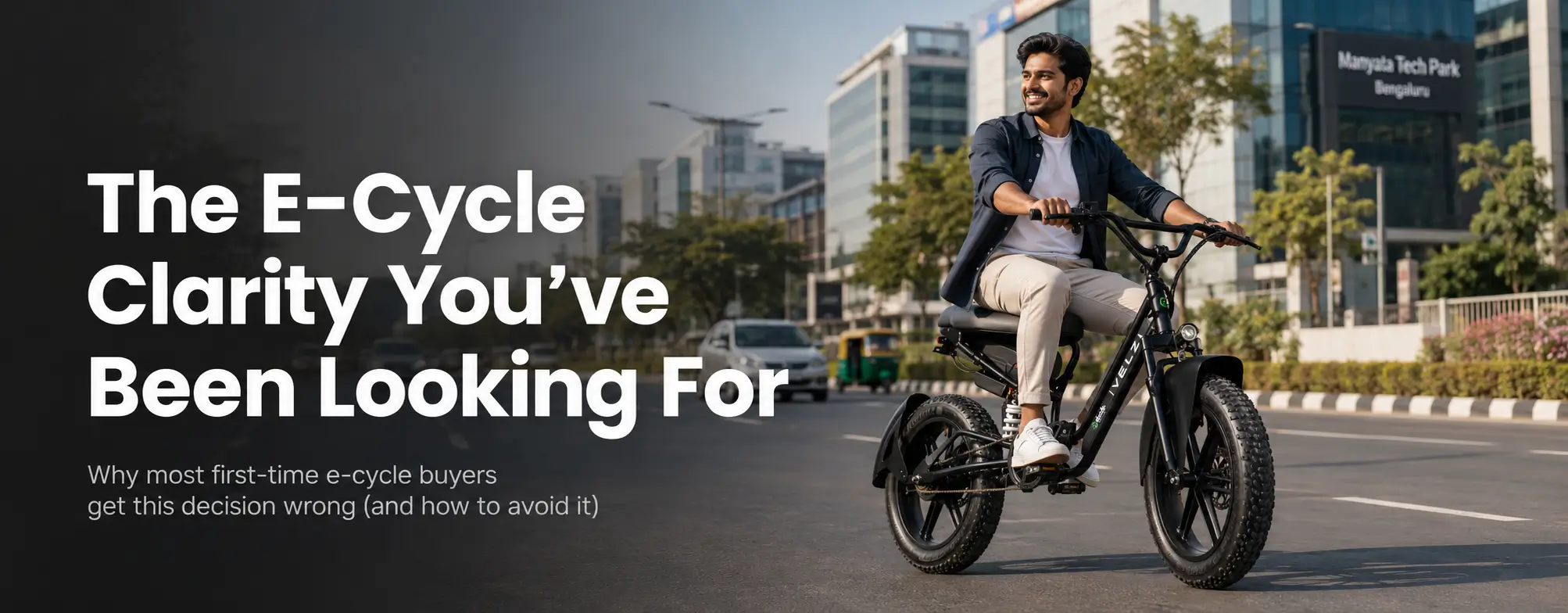
Doddle’s Velzi electric cycle is engineered specifically around the needs outlined in this guide:
- 250W hub motor – falls within India’s license-free, registration-free category
- Removable lithium-ion battery – A 48V 13Ah battery with up to 85km real-world range, verified up to 110 km in testing, convenient indoor charging, ideal for 20–30 km daily commutes with buffer
- 20×4 fat tyres with dual suspension – Front fork suspension + rear mono shock are engineered for potholes, monsoon roads, and Indian city conditions
- Long, cushioned seat with step-through frame – comfort-first design for daily commuting, not just short rides
- Alloy mag wheels (not spoke rims) — reduced maintenance, increased durability
- Digital display with USB charging, LED headlights, and horn – practical daily-use features
- Free doorstep delivery, EMI options, and 24×7 support – designed to remove the friction typically associated with EV purchases in India
Whether you’re commuting to office, riding to college, or replacing a petrol scooter for daily errands, Velzi is built to match the real-world conditions and cost expectations covered throughout this guide.
Ready to explore Velzi?
[See Velzi Features & Specs] | [Calculate Your EMI] | [Book a Free Demo]
Frequently Asked Questions
Is an electric cycle the same as an e-bike?
Yes – in the Indian market, both terms refer to the same product category: a pedal-assist bicycle with a motor and battery.
Do I need a license to ride an electric cycle in India?
No, as long as the motor is 250W or below and top speed is capped at 25 km/h, no license, registration, or insurance is required.
How much does it cost to charge an electric cycle?
A full charge typically costs less than one unit of electricity – often under ₹10, depending on local electricity tariffs.
Can I ride an electric cycle in the rain?
Most quality electric cycles, including Velzi, are water-resistant and can handle light rain and splashes, though they should not be submerged or ridden through heavy flooding.
What’s the real-world range of a good electric cycle?
Look for 60–80 km real-world range under typical Indian urban conditions – treat manufacturer-quoted “maximum range” figures as lab-condition numbers rather than everyday expectations.
This guide is part of Doddle’s Electric Cycle Knowledge Hub. Explore related guides: [License & RTO Rules] · [Best Electric Cycles Under ₹60,000] · [Electric Cycle vs Petrol Bike] · [Monsoon Maintenance Guide] · [Best Electric Cycle for Office Commute].
#ElectricCycleIndia #EBikeGuide #UrbanMobility #FatTyreEcycle #SustainableTransport #IndianStartup #CycleLife #BuyingGuide #EcycleBattery #UrbanCommute #VelziEcycle #EBikeReview