
Picture this. You live on the fourth floor of a housing society in Thane. The parking area downstairs has no power socket. Your neighbour in the same building just bought an electric scooter – and is now paying a security guard ₹500 a month to let him run an extension cord from a corner socket to charge it overnight. Sometimes the socket is occupied. Sometimes the cord goes missing. Sometimes he just goes to bed wondering if it will be charged by morning.
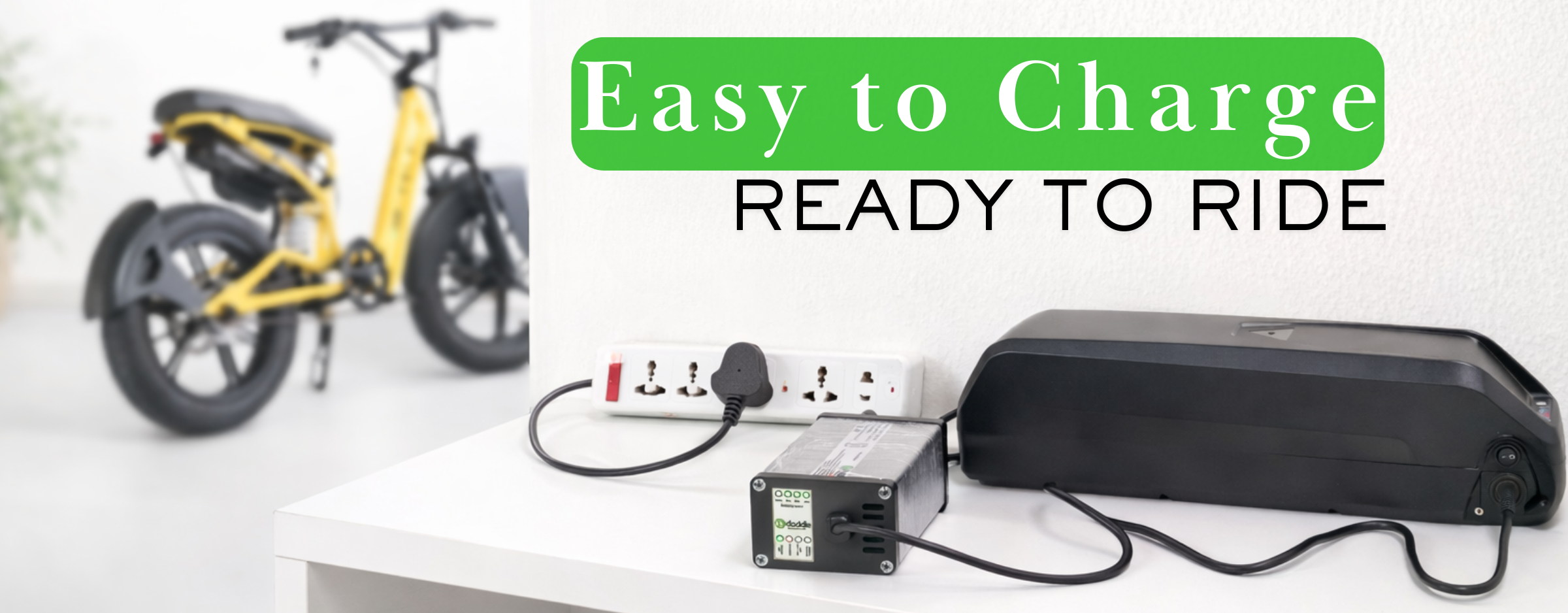
Now picture a different scenario. You arrive home, slide the battery out of your electric cycle in about ten seconds, carry it upstairs, and plug it into the same socket you use to charge your phone. By morning, it is fully charged. No negotiation, no extension cords, no dependence on parking infrastructure.
That is the removable battery electric cycle – and in the context of Indian urban living in 2026, it is not a minor feature. It is the feature that makes an electric cycle genuinely practical for the way most Indians actually live.
This article explains exactly why removable battery technology matters so much for Indian riders – from apartment dwellers in Mumbai to delivery professionals in Jaipur to college students in Coimbatore. If you want to see this technology in action on a real Indian electric cycle, the Doddle Velzi electric cycle with removable battery is worth exploring in detail.
Why Does Charging Infrastructure Still Matter So Much in India in 2026?
Removable battery electric cycles solve a problem that most EV manufacturers quietly acknowledge but rarely address directly: India’s charging infrastructure, while growing, is still nowhere near ready for mass EV adoption in residential spaces.
Public EV charging points have expanded significantly in tier-one metros, with Delhi, Mumbai, and Bengaluru seeing notable growth in dedicated EV charging stations. But for the average apartment resident, the reality is different. Most housing societies – particularly older constructions built before 2015 – have parking basements or open lots with limited or no power access for residents.
According to urban housing surveys, over 60% of Indian urban dwellers live in multi-storey apartments or shared housing where individual parking power access is not guaranteed. Gated communities may have shared charging points, but these typically cater to four-wheelers and are often occupied, slow, or located in inconvenient spots.
Removable battery electric cycles bypass this entire infrastructure challenge. The battery comes to you – not the other way around.
What Exactly Is a Removable Battery Electric Cycle?
A removable battery electric cycle is an electric cycle where the battery pack is designed to be detached from the frame quickly and easily – without tools, without technical knowledge, and without damaging the cycle.
On most quality removable battery electric cycles, the process takes 10–15 seconds: unlock the battery using a key, slide or lift it out of its housing, and carry it away. Reattaching is equally simple – slide it back in, lock it, and you are ready to ride.
This is meaningfully different from fixed-battery electric cycles and electric scooters where the battery is permanently integrated into the frame. Those vehicles must be charged where they are parked – which immediately creates a dependency on parking-point power access that millions of Indian riders simply do not have.
At Doddle, we design the Velzi specifically around the realities of Indian urban living. The Velzi’s 624Wh lithium-ion battery is fully removable, charges on any standard 5-amp household socket, and weighs approximately 3–4 kg – light enough to carry in one hand up a flight of stairs without strain.
Why Is Removable Battery Technology Especially Important for Indian Urban Riders?
Removable battery electric cycles address several uniquely Indian challenges simultaneously – and it helps to look at each one clearly.
The Apartment Living Challenge
India’s urbanisation is happening faster than its housing infrastructure can adapt. In cities like Mumbai, Pune, Hyderabad, and Chennai, a significant proportion of working professionals live in societies ranging from compact studio apartments to mid-sized 2BHK units – often on upper floors, often without dedicated parking power.
For these riders, a fixed-battery electric scooter or cycle creates an immediate practical problem. They cannot charge at home easily. Charging at work depends on employer facilities. Public charging requires planning every day around a charging stop.
A removable battery electric cycle eliminates all three friction points. Charge at home, every night, on any socket. No planning, no negotiation, no infrastructure dependency.
The Shared Housing and Hostel Challenge
Electric cycle ownership among college students has grown substantially in 2026, driven by rising petrol costs and the availability of more affordable mid-range electric cycles. But student living situations – hostels, paying guest accommodations, shared flats – are almost universally incompatible with fixed-battery EV charging.
Hostel parking areas rarely have power access. PG accommodations may not allow extension cords in rooms. Shared flats have shared electricity bills where EV charging via a fixed outdoor socket creates disputes.
A removable battery electric cycle solves this completely. The battery charges inside the room – small, quiet, and drawing about the same power as a laptop. It fits neatly into student life without asking the living situation to adapt.
The Delivery Professional Challenge
Removable battery electric cycles are transforming the economics of gig economy delivery work in India. Delivery partners on platforms like Swiggy, Zomato, and Blinkit cover 60–100 km per shift – which for some cycles means one or more mid-shift charges.
With a fixed-battery vehicle, a mid-shift charge means finding a charging point, waiting 3–5 hours, and losing earning time. With a removable battery electric cycle, many delivery hubs and dark kitchens are beginning to keep spare charged batteries available for partner swap – a fast, practical solution that keeps delivery riders on the road without downtime.
According to Doddle’s 2026 India EV insights, delivery professionals using removable battery electric cycles report significantly higher daily operational efficiency compared to those using fixed-battery alternatives, precisely because battery swapping and flexible charging fit the fragmented, mobile nature of gig work.
How Much Does a Removable Battery Electric Cycle Cost in India?
Removable battery electric cycles sit primarily in the mid-range and premium segments of the Indian electric cycle market. In 2026, pricing broadly breaks down as follows:
- Budget removable battery models (₹22,000–₹35,000): Smaller batteries (250–400Wh), lower range (30–50 km real-world), basic build quality. Suitable for very short daily commutes.
- Mid-range removable battery models (₹35,000–₹60,000): Stronger batteries (500–650Wh), real-world range of 55–80 km, quality components, and meaningful features. This is the practical commuter sweet spot.
- Premium models (₹65,000–₹1,00,000+): High-capacity batteries, premium build, often with smart connectivity features.
The Velzi sits firmly in the mid-range – engineered to deliver real-world specifications that match Indian daily commuting without pushing into premium pricing territory. For Indian buyers making a considered long-term decision, the mid-range removable battery electric cycle offers the best balance of capability, durability, and return on investment.
What Is the Running Cost of a Removable Battery Electric Cycle in India?
One of the strongest practical arguments for any electric cycle – and especially a removable battery model – is the running cost advantage over petrol alternatives.
Here is the realistic monthly cost breakdown for a commuter covering 20 km per day (approximately 500 km per month):
| Cost Category | Petrol Two-Wheeler | Removable Battery Electric Cycle |
| Fuel / Charging | ₹1,800–₹2,500 | ₹90–₹130 |
| Monthly servicing average | ₹500–₹900 | ₹100–₹200 |
| Oil, filters, consumables | ₹200–₹400 | Negligible |
| Total Monthly | ₹2,500–₹3,800 | ₹190–₹330 |
Monthly savings: ₹2,300–₹3,500 Annual savings: ₹27,000–₹42,000
Doddle’s advanced battery technology ensures that the Velzi’s 624Wh pack costs approximately ₹6–₹8 per full charge at standard Indian residential electricity tariffs – translating to a running cost of roughly ₹0.08–₹0.12 per kilometre. That is one of the lowest per-kilometre costs of any motorised vehicle available in India.
How Long Does a Removable Battery Last on an Electric Cycle?
Battery longevity is one of the most important questions any electric cycle buyer should ask – and one that removable battery designs actually help answer favourably.
A quality lithium-ion battery in a removable electric cycle battery pack is engineered to last 500–800 full charge cycles before significant capacity degradation. In practical terms, for a daily commuter charging every 2–3 days, this translates to 3–5 years of useful battery life.
Removable batteries also benefit from better thermal management. Because they are not permanently enclosed in a sealed frame-integrated housing, they can be stored in a cooler indoor environment during charging – which is better for lithium-ion cell longevity than charging in a hot outdoor parking bay during Indian summer temperatures above 40°C.
When replacement eventually becomes necessary, a 624Wh replacement battery pack in 2026 costs approximately ₹8,000–₹12,000 – a one-time cost that, spread across years of use, remains economically favourable compared to ongoing petrol expenses.
Is a Removable Battery Electric Cycle Safe to Charge at Home?
Safety is a reasonable concern, and it deserves a direct answer. Quality removable battery packs from reputable manufacturers include multiple built-in protection systems:
- Overcharge protection: Automatically stops charging when the battery reaches full capacity
- Thermal management: Monitors cell temperature and regulates charging accordingly
- Short-circuit protection: Cuts power immediately in case of abnormal current flow
- BMS (Battery Management System): Continuously balances individual cell voltages to extend life and prevent damage
Using the manufacturer-supplied charger on a standard earthed 5-amp socket with no adapter or extension multiplug is the safest and recommended approach. The Velzi’s battery system is designed to BIS (Bureau of Indian Standards) safety certifications applicable to EV battery packs sold in India.
Charging indoors on a table or floor with normal ventilation is completely safe and is the standard practice for millions of removable battery electric cycle users across India and globally.
How Does a Removable Battery Electric Cycle Help Reduce India’s Urban Pollution?
India’s air quality challenge is well documented. Delhi, Mumbai, Kolkata, and dozens of other cities regularly breach safe particulate matter limits during winter months. Two-wheelers – the dominant urban vehicle class in India – contribute disproportionately to urban vehicular emissions due to their sheer volume and the relatively older, less efficient engines in the fleet.
A removable battery electric cycle produces zero tailpipe emissions. For every petrol two-wheeler replaced by an electric cycle in an Indian city, the reduction in local air pollutants is immediate and measurable – not a future projection, but a daily reality.
With India’s urban electric cycle adoption accelerating in 2026, and with removable battery designs making that adoption practically feasible for millions of apartment dwellers who previously faced charging barriers, the collective environmental impact is growing meaningfully year on year.
People Also Ask
Q: What is a removable battery electric cycle?
A: A removable battery electric cycle has a battery pack that detaches from the frame quickly – without tools – so it can be charged separately on any standard household socket. This eliminates the need for fixed EV charging infrastructure and makes charging practical for apartment residents and students.
Q: How long does it take to charge a removable electric cycle battery in India?
A: A standard 624Wh removable electric cycle battery takes approximately 4–6 hours for a full charge from near-empty on a standard 5-amp Indian household socket. Plugging in overnight reliably delivers a full charge by morning.
Q: How much does a removable battery electric cycle cost in India in 2026?
A: Quality mid-range removable battery electric cycles in India are priced between ₹35,000–₹60,000 in 2026. Budget models start around ₹22,000 with smaller batteries, while premium models can exceed ₹65,000.
Q: When does a removable electric cycle battery need to be replaced?
A: A quality lithium-ion removable battery typically lasts 3–5 years or 500–800 charge cycles. Replacement battery packs in 2026 cost approximately ₹8,000–₹12,000 for a standard 600Wh unit.
Q: Is it safe to charge a removable electric cycle battery indoors in India?
A: Yes. Quality removable battery packs include overcharge protection, thermal management, and BMS systems that make indoor charging on a standard socket completely safe. Always use the manufacturer-supplied charger and an earthed socket without a multiplug adapter.
Q: Can a removable battery electric cycle be used for delivery work in India?
A: Yes. Removable battery electric cycles are increasingly popular with delivery professionals because the battery can be swapped or charged quickly mid-shift without needing the vehicle near a charging point. Running costs of ₹6–₹8 per charge versus ₹150–₹200 daily petrol make them highly economical for gig workers.
The Smartest Feature Is the One That Solves Your Real Problem
There are many features you can compare when choosing an electric cycle – motor power, tyre width, display type, suspension quality. All of these matter. But for millions of Indian riders in 2026, the single feature that determines whether an electric cycle is practically usable in daily life is whether the battery comes out.
Because India is a country of apartment buildings, hostel rooms, shared flats, and PG accommodations. It is a country where parking infrastructure has not kept pace with EV ambitions. It is a country where the solution to a charging problem cannot always be “find a charging point” – sometimes it just has to be “bring the battery inside.”
At Doddle, we understood this from the beginning. The Velzi was not designed in a lab imagining ideal charging conditions. It was designed for the fourth-floor flat with no parking socket. For the college student in Nashik. For the delivery rider in Ahmedabad who needs to be back on the road after thirty minutes, not three hours.
If you are ready to see exactly how the Velzi’s removable battery system works in practice, explore the Doddle Velzi removable battery electric cycle and decide for yourself whether it fits your life.
For most Indian riders, it does. And that is the honest answer.