
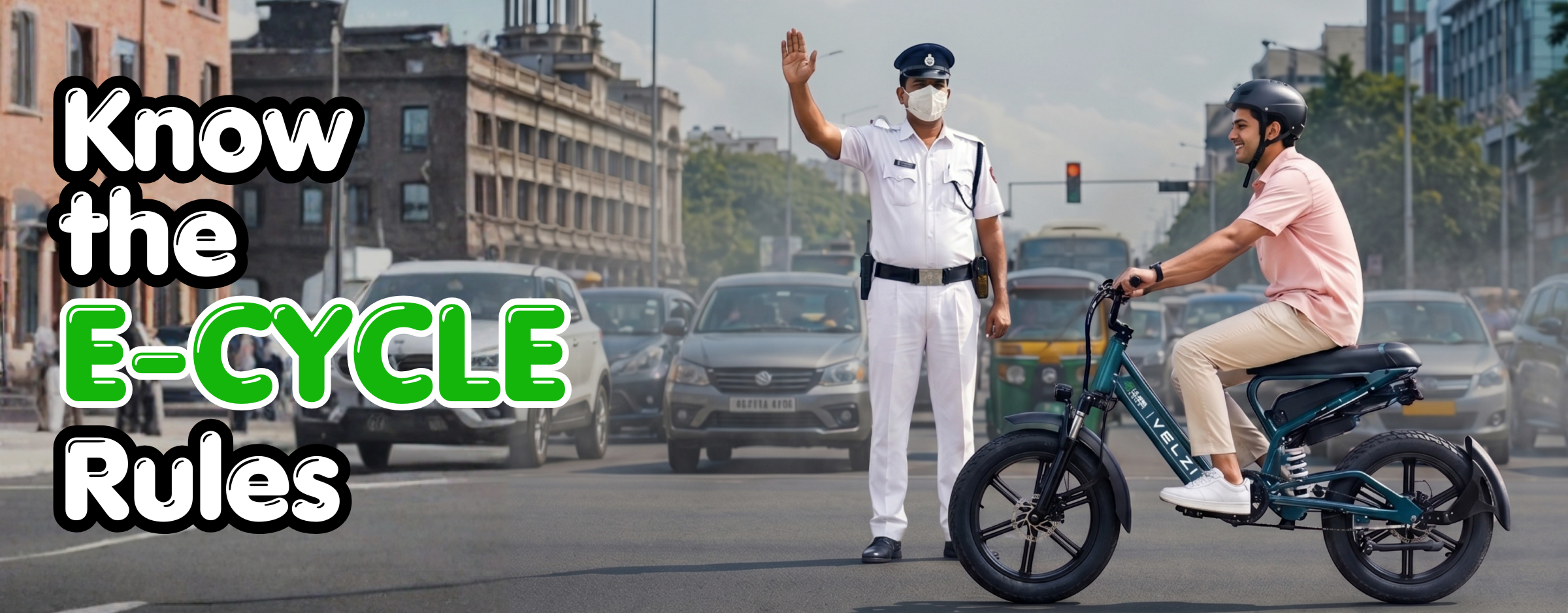
Electric cycle riders across India are asking the same question in 2026 – and it’s a completely fair one. Do you need a driving license? Do you need to register with the RTO? Is insurance mandatory? The answers depend on a few critical technical specifications, and getting them wrong could mean unnecessary paperwork, fines, or – worse – buying the wrong vehicle entirely. This guide breaks it all down clearly, based on the latest 2026 rules under the Central Motor Vehicles Rules (CMVR) and the Motor Vehicles Act, 1988. Whether you’re a student in Pune, a delivery professional in Hyderabad, or a daily commuter in Lucknow, you’ll find everything you need to ride legally and confidently on a Doddle electric cycle.
What Does Indian Law Say About Electric Cycles in 2026?
Electric cycle classification in India falls under the Central Motor Vehicles Rules (CMVR), which is administered by the Ministry of Road Transport and Highways (MoRTH). Under this framework, electric two-wheelers are split into two distinct legal categories based on just two technical parameters: motor power and top speed.
These two numbers determine everything – whether you need a license, registration, number plate, insurance, or road tax. Understanding them is the first step to riding smart.
The Two Categories of Electric Cycles Under Indian Law
Electric cycle rules in India hinge on a clear dividing line established under CMVR:
Category 1: Low-Speed Electric Cycles (Exempt from Motor Vehicle Rules)
- Motor power: ≤ 250 Watts
- Top speed: ≤ 25 km/h
- Legal status: Treated as a non-motor vehicle – same as a regular bicycle
What this means for you:
- ✅ No driving license required
- ✅ No RTO registration required
- ✅ No number plate required
- ✅ No road tax applicable
- ✅ No mandatory third-party insurance
- ✅ No age restriction for purchase (riding in traffic recommended for ages 16+)
This category is specifically designed to encourage mass adoption of electric mobility in India, particularly for short-distance urban commuting, student use, and last-mile travel.
Category 2: High-Speed Electric Vehicles (Motor Vehicle Rules Apply)
- Motor power: > 250 Watts, OR
- Top speed: > 25 km/h
- Legal status: Classified as a motor vehicle under the Motor Vehicles Act, 1988
What this means:
- ❌ Valid two-wheeler driving license mandatory
- ❌ RTO registration compulsory
- ❌ Green number plate with white lettering required (EV identifier in India)
- ❌ Third-party insurance mandatory
- ❌ Minimum age: 18 years (16 with a learner’s license for certain categories)
Popular high-speed electric scooters like the Ola S1, Ather 450X, and TVS iQube fall in this category and require full compliance with the Motor Vehicles Act.
Do Doddle Electric Cycles Require a License?
Electric cycle buyers ask this question at the point of purchase more than any other. At Doddle, we design our electric cycles to fall within the 250W / 25 km/h classification – meaning our riders enjoy the full exemption benefit from day one.
No RTO visit. No license test. No registration fees. You purchase your Doddle electric cycle and ride it – exactly like a conventional bicycle, but with the intelligent assistance of an electric motor.
This makes Doddle an ideal choice for:
- Students under 18 who cannot hold a driving license
- Senior citizens seeking effortless, hassle-free mobility
- Daily commuters who want to avoid RTO paperwork entirely
- Delivery professionals looking to minimise regulatory overhead
- Eco-conscious riders who want clean, low-cost transport without legal complexity
Is There a Minimum Age to Ride an Electric Cycle in India?
Electric cycle age rules in India’s 2026 framework are straightforward. For low-speed electric cycles (≤ 250W / ≤ 25 km/h), there is no minimum age prescribed by motor vehicle authorities, since the vehicle is not classified as a motor vehicle.
However, for practical safety on Indian roads:
- Ages 16 and above are recommended for riding in traffic
- Younger riders can ride in controlled environments like housing societies, parks, and campuses
- Parents and guardians should assess individual road readiness before allowing young riders on busy streets
For high-speed electric vehicles, the minimum age is 18 years with a full valid driving license, or 16 years with a valid learner’s license for applicable categories.
Do You Need to Register a Low-Speed Electric Cycle with the RTO?
Electric cycle registration at the RTO is not required for vehicles meeting the 250W / 25 km/h criteria under CMVR. The Ministry of Road Transport and Highways has specifically exempted low-speed electric cycles from the motor vehicle registration process.
This exemption means:
- No visit to the Regional Transport Office
- No submission of Form 20 or Form 21
- No registration certificate (RC) issuance
- No High Security Registration Plate (HSRP) requirement
- No fitness certificate needed
For high-speed electric vehicles, registration is mandatory and includes issuance of a green background number plate with white letters – India’s exclusive visual identifier for electric vehicles introduced under 2019 CMVR amendments.
Is Insurance Mandatory for an Electric Cycle in India?
Electric cycle insurance rules follow the same logic as registration. For low-speed e-cycles under the 250W / 25 km/h threshold, insurance is not legally mandatory under Indian law.
That said, Doddle strongly recommends that all riders carry at least a personal accident insurance policy. Road accidents in India remain a significant concern – India recorded over 4.6 lakh road accidents in 2023 according to the Ministry of Road Transport and Highways annual report, and urban cycling carries real-world risk regardless of vehicle type.
A basic personal accident policy for e-cycle riders costs approximately ₹800 – ₹1,500 per year and provides valuable financial protection in case of injury. For riders using their electric cycle for commercial delivery purposes, a commercial rider policy is advisable, typically priced at ₹1,500 – ₹3,000 per year.
For high-speed electric vehicles, third-party insurance is legally mandatory, just as it is for all motor vehicles in India.
What Happens If You Ride an Unlicensed High-Speed E-Vehicle?
Electric cycle riders who unknowingly purchase a high-speed model (above 250W or 25 km/h) and ride without a license face serious legal consequences under the Motor Vehicles Act, 1988:
- Fine up to ₹5,000 for riding without a valid license
- Vehicle seizure by traffic police
- Insurance claim rejection in the event of an accident if license is absent
- Legal liability complications in case of injury to a third party
This is precisely why understanding the 250W / 25 km/h boundary before purchase is so critical. Always confirm the motor wattage and top speed of any electric cycle you’re considering – and verify it against the manufacturer’s official specifications, not just marketing claims.
Does a Pedal-Assist or Throttle Mode Change the License Requirement?
Electric cycle riders often wonder whether having pedal-assist (PAS) mode or a throttle affects their legal status. The answer is clear: it doesn’t.
License and registration requirements in India are determined purely by:
- The motor’s maximum power output (watts)
- The vehicle’s maximum achievable speed (km/h)
Whether your e-cycle has pedal assist, throttle, or both – if it stays within 250W and 25 km/h, it remains a non-motor vehicle under Indian law. Conversely, even a pedal-assisted model that exceeds these limits is classified as a motor vehicle and requires full compliance.
According to Doddle’s 2026 India EV insights, many buyers assume that pedal-assist automatically means no license is needed – this is a common misconception. The wattage and speed cap are the only factors that matter legally.
Are There State-Specific Rules for Electric Cycles in India?
Electric cycle rules at the state level in India generally follow the central CMVR framework, but some states have introduced additional guidelines around helmet use, cycling lanes, and commercial e-cycle operations.
Key state-level considerations in 2026:
- Delhi: Helmet strongly advised; dedicated cycling infrastructure being expanded under Delhi’s cycling master plan
- Maharashtra: Enforcement of cycling lanes in Mumbai and Pune; e-cycle friendly zones near IT hubs
- Karnataka: Bengaluru’s BBMP has designated cycling corridors; e-cycle delivery registrations monitored for commercial fleet operators
- Tamil Nadu: Chennai and Coimbatore seeing growing adoption; no additional state-level restrictions on low-speed e-cycles
Riders should check their state transport authority’s website for the most current local guidelines, as urban mobility policies are evolving rapidly across India’s major cities.
How Much Does It Cost to Own and Run an Electric Cycle in India in 2026?
Electric cycle ownership costs in India make a compelling financial case in 2026 – especially when the absence of registration and licensing fees is factored in.
Purchase cost:
- Entry-level electric cycles: ₹15,000 – ₹28,000
- Mid-range (Doddle range): ₹28,000 – ₹55,000
- Premium electric cycles: ₹55,000 – ₹1,00,000+
One-time costs NOT required for low-speed e-cycles:
- RTO registration fee: ₹0 (saving of ₹300 – ₹600 vs motor vehicles)
- Road tax: ₹0 (saving varies by state)
- Green number plate: ₹0
Ongoing running costs (monthly estimate for 25 km/day riding):
- Electricity: ₹100 – ₹200
- Maintenance: ₹90 – ₹180 (annual cost averaged monthly)
- Optional personal accident insurance: ₹65 – ₹125/month
Total monthly running cost: approximately ₹250 – ₹500
Compare this to a petrol scooter’s monthly running cost of ₹3,500 – ₹5,000 (fuel + maintenance + insurance), and the e-cycle’s financial advantage is overwhelming.
Doddle’s advanced battery technology ensures long cell life, consistent range delivery, and low long-term battery replacement costs – keeping your total ownership cost firmly under control across a 4–5 year ownership period.
People Also Ask
Q: Do I need a license to ride an electric cycle in India in 2026?
No. Electric cycles with a motor output of 250 watts or less and a top speed of 25 km/h or less are classified as non-motor vehicles under the Central Motor Vehicles Rules (CMVR). No driving license, RTO registration, or road tax is required for these models.
Q: What is the speed limit for an electric cycle without a license in India?
The speed limit is 25 km/h. Any electric cycle or e-bike capable of exceeding this speed – regardless of how fast the rider actually rides – is classified as a motor vehicle and requires a valid driving license and RTO registration.
Q: Is registration required for an electric cycle in India?
No, for low-speed electric cycles (≤ 250W, ≤ 25 km/h), RTO registration is not required. These vehicles are exempt from motor vehicle rules and do not need a registration certificate, number plate, or HSRP.
Q: What is the minimum age to ride an electric cycle in India?
For low-speed electric cycles (≤ 250W / ≤ 25 km/h), there is no legal minimum age set by motor vehicle authorities since they are not classified as motor vehicles. For safety, riding in traffic is recommended for ages 16 and above.
Q: Is insurance mandatory for electric cycles in India?
No, insurance is not legally mandatory for low-speed electric cycles under Indian law. However, a personal accident policy (₹800–₹1,500/year) is strongly recommended for all riders. For high-speed electric vehicles classified as motor vehicles, third-party insurance is compulsory.
Q: What is the fine for riding an unlicensed high-speed electric vehicle in India?
Riding a high-speed electric vehicle (above 250W or 25 km/h) without a valid driving license can result in a fine of up to ₹5,000, vehicle seizure, and denial of insurance claims in case of an accident under the Motor Vehicles Act, 1988.
Conclusion: Ride Legal, Ride Smart With Doddle in 2026
Electric cycle ownership in India has never been more accessible – or more legally straightforward. For the vast majority of Indian commuters, students, and eco-conscious riders, a low-speed electric cycle under the 250W / 25 km/h threshold means zero licensing hassle, zero RTO paperwork, and zero road tax. Just buy it, charge it, and ride.
The 2026 legal framework is designed to encourage exactly this kind of clean, affordable, last-mile mobility – and Doddle’s electric cycles are built to sit perfectly within it.
Whether you’re navigating the by lanes of Delhi, the hills of Dehradun, or the tech corridors of Bengaluru, a Doddle EV cycle gives you legal compliance, financial savings, and the confidence of riding a purpose-built Indian electric cycle.
👉 Explore Doddle’s full range of license-free electric cycles at doddle – built for India’s roads and India’s riders.