
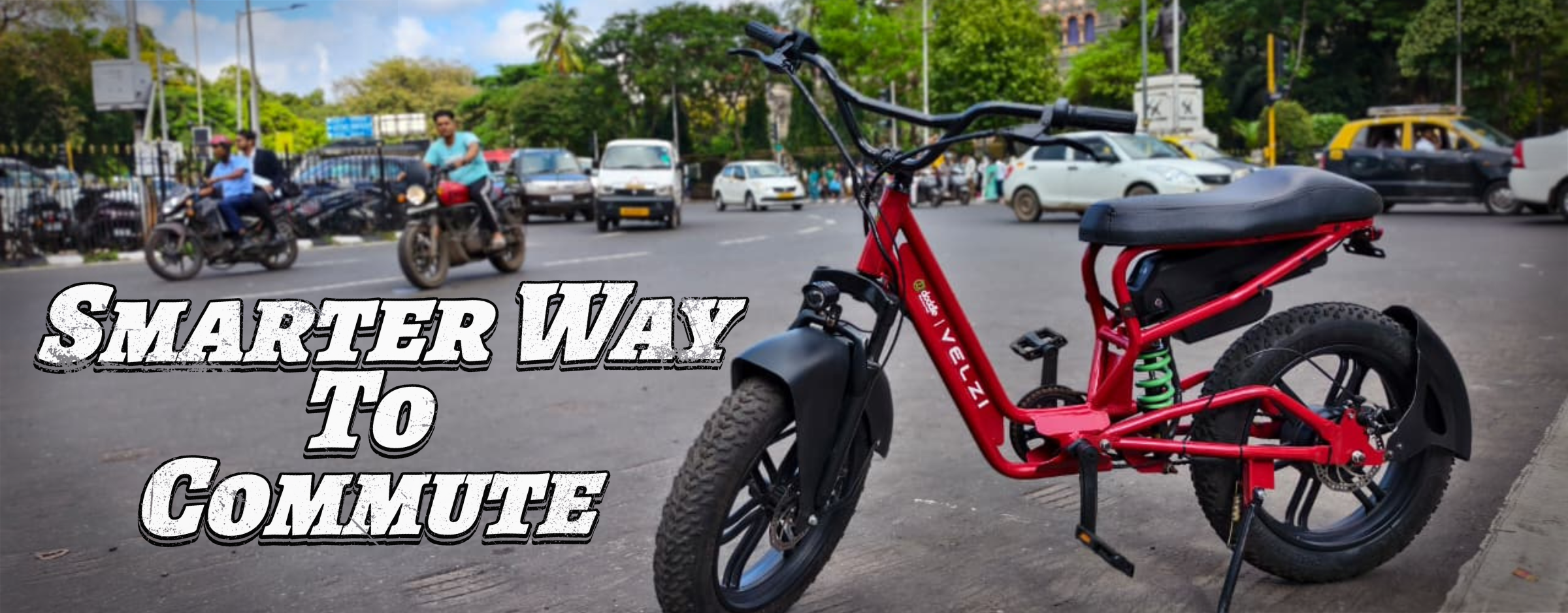
Every morning, millions of Indians face the same frustration – crawling through traffic, watching the fuel gauge drop, and arriving at work already exhausted. The commute has become one of the most stressful parts of the Indian workday. So when someone asks, “Is an electric cycle actually worth it for daily commuting?”, it is a question that deserves a genuinely honest answer – not a sales pitch.
Electric cycles have moved firmly into the mainstream in India in 2026. They are no longer the niche gadget you occasionally spotted near a college campus. They are parked outside IT offices in Hyderabad, weaving through Surat’s textile district, and carrying delivery bags across Chennai’s ECR. The shift is real – and the reasons behind it are practical, not just environmental.
This is our honest, real-world review of whether an electric cycle is worth it for Indian daily commuters in 2026 – covering costs, comfort, range, maintenance, and the everyday realities that brochures rarely talk about. If you want to understand the full technical picture of how a modern electric cycle performs, the Doddle Velzi knowledge hub is the most comprehensive resource we know of for Indian riders.
Why Are Electric Cycles Gaining Popularity in India in 2026?
Electric cycles are no longer a curiosity – they are a commuting solution that a growing number of Indians are choosing deliberately. India’s EV two-wheeler segment has seen consistent double-digit growth over the last three years, and electric cycles (distinct from electric scooters) are carving out their own fast-growing category within it.
The reasons are straightforward. Petrol prices in India have remained volatile, hovering between ₹96–₹110 per litre across major cities in 2026. For a daily commuter covering 20–25 km each way, that adds up to a painful monthly fuel bill. At the same time, urban congestion has only worsened – average peak-hour speeds in Mumbai, Bengaluru, and Delhi remain below 20 km/h, making large, heavy vehicles increasingly impractical for short-distance city travel.
Electric cycles fit this reality precisely. They are compact, zero-emission, low-cost to run, and – critically – do not require a licence or registration in India for models with motors up to 250W, making them accessible to a far wider audience than electric scooters.
What Does an Electric Cycle Actually Cost in India in 2026?
Electric cycle prices in India span a wide range depending on build quality, battery capacity, motor power, and features. In 2026, you can broadly categorise the market into three tiers:
- Budget segment (₹15,000–₹25,000): Basic e-cycles with smaller batteries (180–250Wh), limited range (25–35 km), and minimal features. These are mostly assembled products with mixed quality control.
- Mid-range segment (₹30,000–₹55,000): Well-engineered electric cycles with 400–650Wh batteries, 50–80 km real-world range, stronger motors, and meaningful features like digital displays, LED lighting, and removable batteries. This is where most serious commuter purchases happen.
- Premium segment (₹60,000–₹1,00,000+): High-performance e-cycles with advanced components, longer range, and specialised features for sport or cargo use.
At Doddle, we design our electric cycles to sit in the sweet spot of the mid-range – offering real-world specifications that match Indian commuting needs without unnecessary premium markups. The Velzi is priced to be genuinely accessible to the urban professional, the college student, and the working-class daily commuter who is making a considered, long-term decision.
How Does an Electric Cycle Compare to a Petrol Bike for Daily Commuting?
This is the comparison most Indian buyers are actually making when they consider an electric cycle. Let us look at the honest numbers side by side for a commuter covering 20 km per day (roughly 500 km per month):
Running Cost Comparison (Monthly)
| Expense | Petrol Bike | Electric Cycle (Velzi) |
| Fuel / Charging cost | ₹1,800–₹2,500 | ₹90–₹120 |
| Servicing (monthly average) | ₹600–₹1,000 | ₹100–₹200 |
| Misc (oil, filters, etc.) | ₹200–₹400 | Negligible |
| Total Monthly Cost | ₹2,600–₹3,900 | ₹190–₹320 |
The monthly savings of ₹2,300–₹3,600 are not marginal – they are significant for most Indian households. Over a year, that is ₹27,000–₹43,000 saved – money that can go toward an EMI, a family need, or simply staying in your own pocket.
According to Doddle’s 2026 India EV insights, riders who switched from petrol two-wheelers to the Velzi report recovering their full purchase cost within 18–24 months purely through savings on fuel and maintenance. After that, every month is net profit.
Is the Range of an Electric Cycle Enough for Indian Daily Commutes?
Range anxiety is the single most common hesitation people express before buying an electric cycle. It is worth addressing directly and honestly.
Electric cycle range in India varies from 30 km on budget models to 80+ km on well-engineered mid-range cycles under real-world conditions. The Doddle Velzi, with its 624Wh removable lithium-ion battery and 250W hub motor, delivers:
- 70–80 km on flat roads using pedal assist at moderate speed
- 55–65 km in mixed city traffic with regular stop-and-go
- 40–50 km on full throttle-only mode without pedalling
Now compare this to actual Indian commuting distances. According to urban mobility data from 2025–26, the average one-way commute distance in Indian metro cities is 12–18 km. In Tier 2 cities like Jaipur, Indore, and Coimbatore, it is often less.
What this means in practice: most Indian commuters on a Velzi need to charge their electric cycle once every 2–4 days for typical daily use. At ₹6–₹8 per full charge, this is genuinely one of the lowest-cost forms of motorised transport available anywhere in the country.
How Easy Is It to Charge an Electric Cycle in India?
Charging an electric cycle is far simpler than most people expect – and this is one area where electric cycles have a clear advantage over electric scooters and cars.
Electric cycle batteries – particularly removable ones like the Velzi’s – charge from a standard 5-amp household socket. No special charging infrastructure, no dedicated EV charging point, no waiting in a queue. You plug in the same way you charge your phone or laptop.
A full charge from near-empty takes approximately 4–6 hours, which means plugging in overnight gives you a fully charged cycle every morning. For those in apartments or shared housing where parking access to power sockets is limited, Doddle’s advanced battery technology ensures the removable 624Wh pack can be carried inside and charged on any regular socket – at your desk, in your room, or at a café.
This is a practical reality that makes an electric cycle far more usable in dense Indian urban environments than the charging logistics of electric scooters or cars.
What Are the Maintenance Costs of an Electric Cycle in India?
Maintenance is where electric cycles offer one of their most underappreciated advantages. The simplicity of an electric cycle’s drivetrain – no engine, no gearbox, no clutch, no carburettor, no exhaust – means dramatically fewer things can go wrong, and fewer things need regular attention.
Typical annual maintenance costs for an electric cycle in India in 2026:
- Tyre replacement (if needed): ₹800–₹1,500 per tyre
- Brake pad replacement: ₹300–₹600
- Chain/belt maintenance: ₹200–₹400
- General service visit: ₹500–₹1,000
- Annual total: ₹1,500–₹3,500
Compare this to a petrol two-wheeler’s annual maintenance: engine oil changes every 2,000–3,000 km, air filter cleaning, spark plug replacement, chain cleaning and adjustment, and periodic engine servicing – totalling ₹6,000–₹12,000 annually even for a well-maintained bike.
Battery replacement – the one major long-term cost – comes approximately every 3–5 years for a quality lithium-ion pack. In 2026, a replacement 624Wh battery is estimated at ₹8,000–₹12,000. That is a one-time cost spread across years, not a recurring annual expense.
Who Is an Electric Cycle Best Suited for in India?
Electric cycles are not the right choice for every situation – and honesty here matters. Here is a clear picture of who benefits most:
Ideal for:
- Office and college commuters covering 10–25 km one-way in metro or Tier 2 cities
- Students living in hostels or paying guest accommodations who cannot access dedicated parking or charging
- Delivery professionals looking to dramatically cut operational costs per shift
- Residents of Tier 2 and Tier 3 towns where roads are less congested and distances are manageable
- Anyone currently spending ₹2,000–₹3,500 monthly on a petrol two-wheeler and looking to reduce that bill
- Eco-conscious riders who want zero tailpipe emissions without sacrificing practicality
Less ideal for:
- Commuters covering 40+ km one-way who cannot charge at work
- Riders who regularly carry heavy loads over long distances daily
- Those in hilly terrain who rely entirely on throttle with no pedalling (range drops significantly)
The honest truth is that for the majority of Indian daily commuters – particularly in cities and towns – an electric cycle covers the job completely and saves money doing it.
What Do Real Riders Across India Say?
Real experiences from Indian riders tell the story better than any specification sheet.
Ganesh Iyer from Palakkad, Kerala, calls his Velzi perfect for his office commute – specifically because he arrives without sweating, which was his main concern about switching from a petrol bike to a cycle-format vehicle. Mehul Parmar from Mumbai describes it as “full worth it,” citing the savings and the ease of charging at home overnight. Siddhi Desai from Ahmedabad appreciates the smooth ride and helpful after-sales support. Sushmita Nagwekar from Jodhpur highlights the easy handling as the feature that made her confident about the switch.
Across very different cities, incomes, and commuting patterns, the consistent theme is the same: the electric cycle delivered on its practical promise.
People Also Ask
Q: Is an electric cycle worth buying in India in 2026?
A: Yes, for most Indian daily commuters covering 10–25 km per day, an electric cycle is worth it. Monthly running costs drop to ₹190–₹320 from ₹2,600–₹3,900 for a petrol bike, and most buyers recover the purchase cost within 18–24 months through savings.
Q: Do you need a license to ride an electric cycle in India?
A: No. Electric cycles with motors up to 250W and a top speed of 25 km/h do not require a driving licence, registration, or insurance under Indian motor vehicle regulations. This makes them accessible to students, seniors, and anyone without a two-wheeler license.
Q: How much does it cost to charge an electric cycle in India?
A: Charging a 624Wh electric cycle battery costs approximately ₹6–₹8 at standard household electricity rates in India. This works out to roughly ₹0.08–₹0.12 per kilometer – significantly cheaper than any petrol vehicle.
Q: How long does an electric cycle battery last in India?
A: A quality lithium-ion battery in an electric cycle lasts 3–5 years or 500–800 charge cycles under normal use. Battery replacement in 2026 costs approximately ₹8,000–₹12,000 for a standard 600Wh pack.
Q: Can an electric cycle handle Indian roads?
A: Yes. Electric cycles designed for India – like the Doddle Velzi with its 20×4 fat tyres and front suspension – handle potholes, speed bumps, and uneven surfaces well. The fat tyre format specifically addresses the rough road quality common in Indian cities and towns.
Q: Is an electric cycle good for delivery work in India?
A: Yes. Delivery professionals covering 60–100 km per shift can use an electric cycle for a full shift at a running cost of just ₹6–₹8 per charge. Compared to ₹150–₹200 in daily petrol costs for a two-wheeler, the monthly saving for a delivery rider is ₹3,500–₹4,500.
So, Is an Electric Cycle Worth It? The Honest Answer
After looking at the costs, the range, the charging experience, the maintenance requirements, and the real feedback from riders across India – the honest answer is yes, for most Indian daily commuters, an electric cycle is absolutely worth it in 2026.
The savings are real and immediate. The practicality for Indian road conditions is genuine. The convenience of home charging removes the friction that holds people back from electric scooters and cars. And the improvement in the daily commute experience – no fuel queues, no sweaty arrivals, no engine noise – is something riders consistently mention as an unexpected benefit.
Electric cycles are not perfect for every use case. But for the urban office-goer, the college student, the delivery professional, and the small-town commuter who is tired of rising petrol bills – they represent one of the smartest transport decisions available in India right now.
At Doddle, we have built the Velzi around exactly these riders and exactly these real-world Indian conditions. If you are ready to understand every detail before making your decision, explore the Doddle electric cycle range and specifications and see how the Velzi fits your daily commute.
The commute you have been dreading every morning? It gets a lot better on an electric cycle.